Table of Contents
The pace of technological change has officially moved from fast to dizzying. In 2026, we are no longer just talking about digital transformation; we are living in its fully realised second act. If 2023 was the year of the chatbot and 2024 was the year of enterprise integration, 2026 is the year technology begins to think, act, and interact with the physical world in ways that were once reserved for science fiction.
Understanding the top technology trends is no longer a luxury for IT departments. It is a survival requirement for anyone navigating the modern workforce. From the rise of autonomous agents that manage our calendars to the quiet revolution of green software, the tools we use today are reshaping our careers and our daily lives. This guide breaks down the seismic shifts currently redefining the global landscape.
1. Agentic AI: From Assistants to Digital Workers
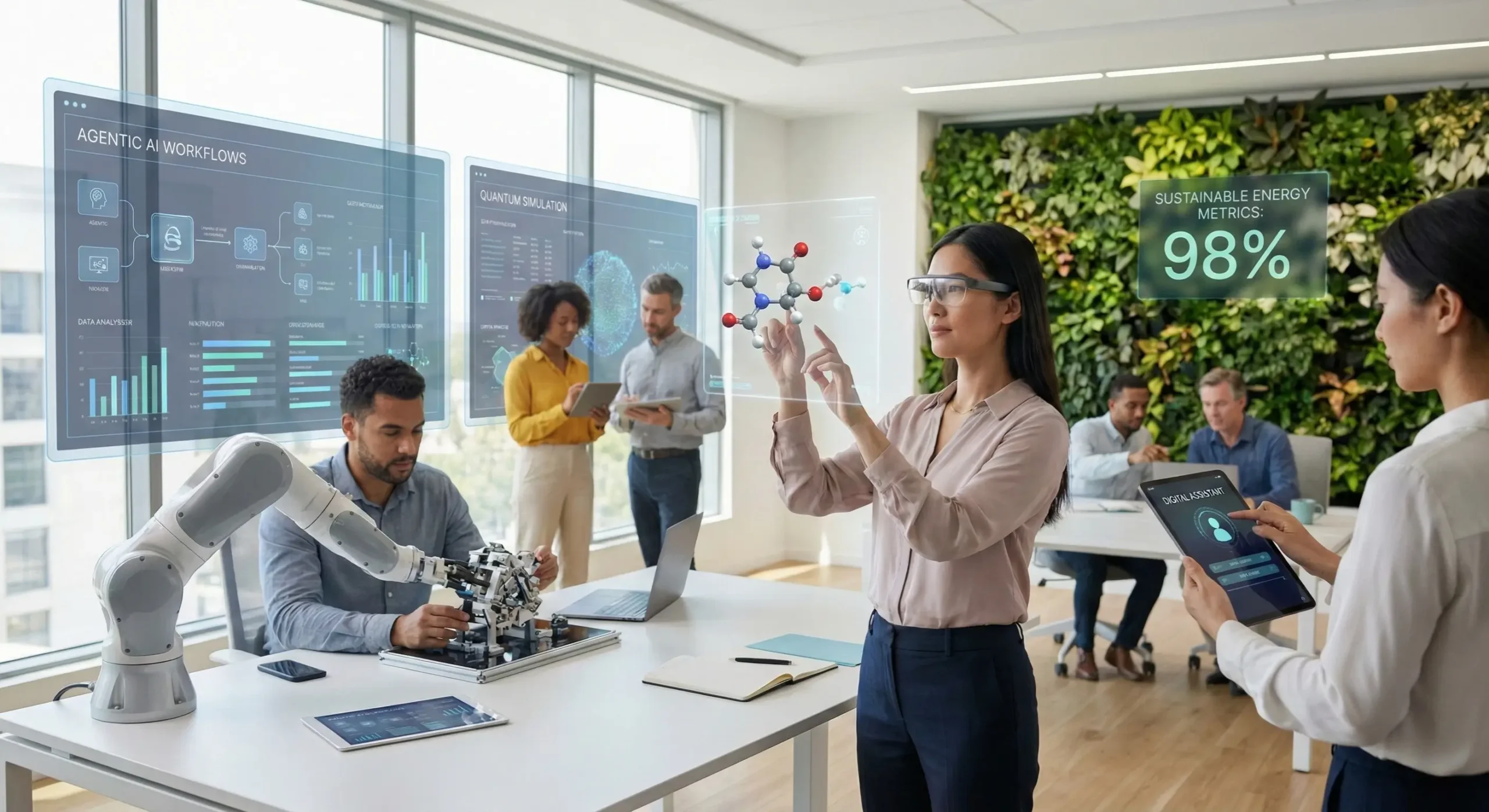
The era of simply asking a chatbot to write an email is behind us. One of the most significant top technology trends this year is the transition from Generative AI to Agentic AI. Unlike previous iterations, these systems do not just provide information; they execute multi-step workflows with minimal human intervention.
Autonomous Task Management
In 2026, AI agents have evolved into specialized digital workers. Instead of providing a list of flights, an agent can now book the travel, handle the calendar invites, and even negotiate a refund if a flight is delayed. This shift moves the focus from prompt engineering to delegation and oversight.
The Rise of Agentic Ecosystems
We are seeing the birth of ecosystems where different AI agents talk to each other. A sales agent might automatically trigger a legal agent to draft a contract, which then notifies a project management agent to set up a kickoff call. This level of interoperability is fundamentally changing how businesses scale without increasing headcount linearly.
2. Spatial Computing and the Death of the Flat Screen
For decades, our digital lives were trapped behind glass rectangles. In 2026, spatial computing has finally matured, blending digital elements seamlessly into our physical environments. This isn’t just about gaming; it is about how we work and interact with our surroundings.
Mixed Reality Workspaces
The traditional office setup is being replaced by mixed reality environments. Professionals are increasingly using lightweight headsets to project infinite monitors into their living rooms. This trend is driving a new wave of digital transformation strategies that prioritise remote collaboration without the “Zoom fatigue” of previous years.
Immersive Retail and Maintenance
Retailers are using spatial computing to allow customers to “try on” furniture or clothing with perfect physical fidelity. Simultaneously, industrial workers are using AR overlays to perform complex repairs on machinery they have never seen before, receiving real-time guidance from remote experts projected directly onto their field of vision.
3. Sustainable Technology as a Core Requirement
Sustainability has moved from a marketing buzzword to a technical constraint. As data centres consume more energy than ever to power AI models, the tech industry is pivoting toward “clean-by-design” architectures. Sustainable technology is now a primary driver of investment and innovation.
Green Software Engineering
Developers are no longer just optimising for speed; they are optimising for carbon footprints. Green software engineering involves writing code that requires less computational power and scheduling heavy data processing for times when renewable energy is most available on the grid.
The Circular Hardware Economy
The “take-make-waste” model is being replaced by hardware modularity. Major tech manufacturers are now designing devices that are intended to be repaired, upgraded, and recycled. This shift is a direct response to global e-waste regulations and a growing consumer demand for ethical technology.
4. Quantum Computing Hits the Practical Threshold
Quantum computing has transitioned from purely theoretical research to specialised commercial applications. While we aren’t yet using quantum smartphones, the impact on specific industries is profound, making it one of the most critical top technology trends to watch.
Breakthroughs in Drug Discovery
Pharmaceutical companies are using quantum simulations to model molecular interactions at a level of detail that was previously impossible. This is cutting the time required to identify viable drug candidates from years to months, potentially leading to cures for diseases that have eluded us for decades.
Post-Quantum Cryptography
As quantum computers become more powerful, they pose a threat to traditional encryption. In 2026, many organisations are racing to implement quantum-resistant algorithms to protect sensitive data from future “harvest now, decrypt later” attacks.
5. Physical AI: Robotics with a Brain
AI is finally getting a body. In 2026, the convergence of advanced computer vision and large action models has led to a new generation of robots that can navigate unstructured environments like homes and hospitals.
- Human-Robot Teaming: Robots are now working alongside humans in warehouses, not just in cages. They can understand natural language commands and adapt to changes in their environment in real-time.
- Micro-Robotics in Healthcare: Incredibly small robotic systems are beginning to be used for non-invasive surgeries and targeted drug delivery inside the human body.
- Autonomous Logistics: Beyond self-driving cars, we are seeing the rise of autonomous delivery drones and sidewalk robots that have become common sights in urban centres.
Common Mistakes in Tech Adoption
Despite the excitement, many organisations and individuals stumble when trying to integrate these top technology trends. Experience shows that a “tech-first” approach often leads to expensive failures. Here are the most frequent pitfalls:
The “Shiny Object” Syndrome
Many businesses rush to adopt the latest trend—like generative AI or spatial computing—without a clear use case. This results in “pilot purgatory,” where projects never move beyond the testing phase because they don’t solve a real business problem. Always start with the problem, not the tool.
Ignoring Data Privacy and Ethics
As technology becomes more agentic and immersive, it collects more intimate data. Companies that overlook the ethical implications of AI bias or the privacy concerns of spatial data often face severe regulatory backlash and a loss of consumer trust. Tech adoption must be built on a foundation of transparency.
Best Practices for Navigating the Future
To stay relevant in a landscape shaped by these top technology trends, you need a strategy that balances agility with pragmatism. Follow these actionable steps to ensure you are leading, not just following.
- Cultivate a Continuous Learning Culture: The half-life of technical skills is shrinking. Invest in micro-learning platforms that allow your team to stay updated on AI and spatial computing developments without needing to take months off for retraining.
- Prioritise Interoperability: When choosing new tools, ensure they can “talk” to your existing stack. The future belongs to integrated ecosystems, not siloed software.
- Implement “Human-in-the-Loop” Systems: Even as AI becomes more autonomous, human oversight remains critical. Establish clear guardrails and audit processes to ensure AI outputs align with your brand values and safety standards.
- Focus on Data Literacy: Everyone in your organisation, from HR to sales, needs to understand how to interpret and question data. This is the only way to effectively manage the “black box” nature of modern AI.
Final Thoughts
The top technology trends of 2026 represent more than just a list of new gadgets. They signify a fundamental shift in our relationship with the digital world. We are moving toward a future where technology is more invisible, more helpful, and more integrated into the fabric of our existence than ever before.
While the pace of change can feel overwhelming, the opportunity it presents is unprecedented. By focusing on sustainable growth, ethical implementation, and continuous learning, you can harness these trends to build a future that is not only more efficient but also more human-centric. The future isn’t something that happens to us; it is something we build with the tools we choose to master today.