
Table of Contents
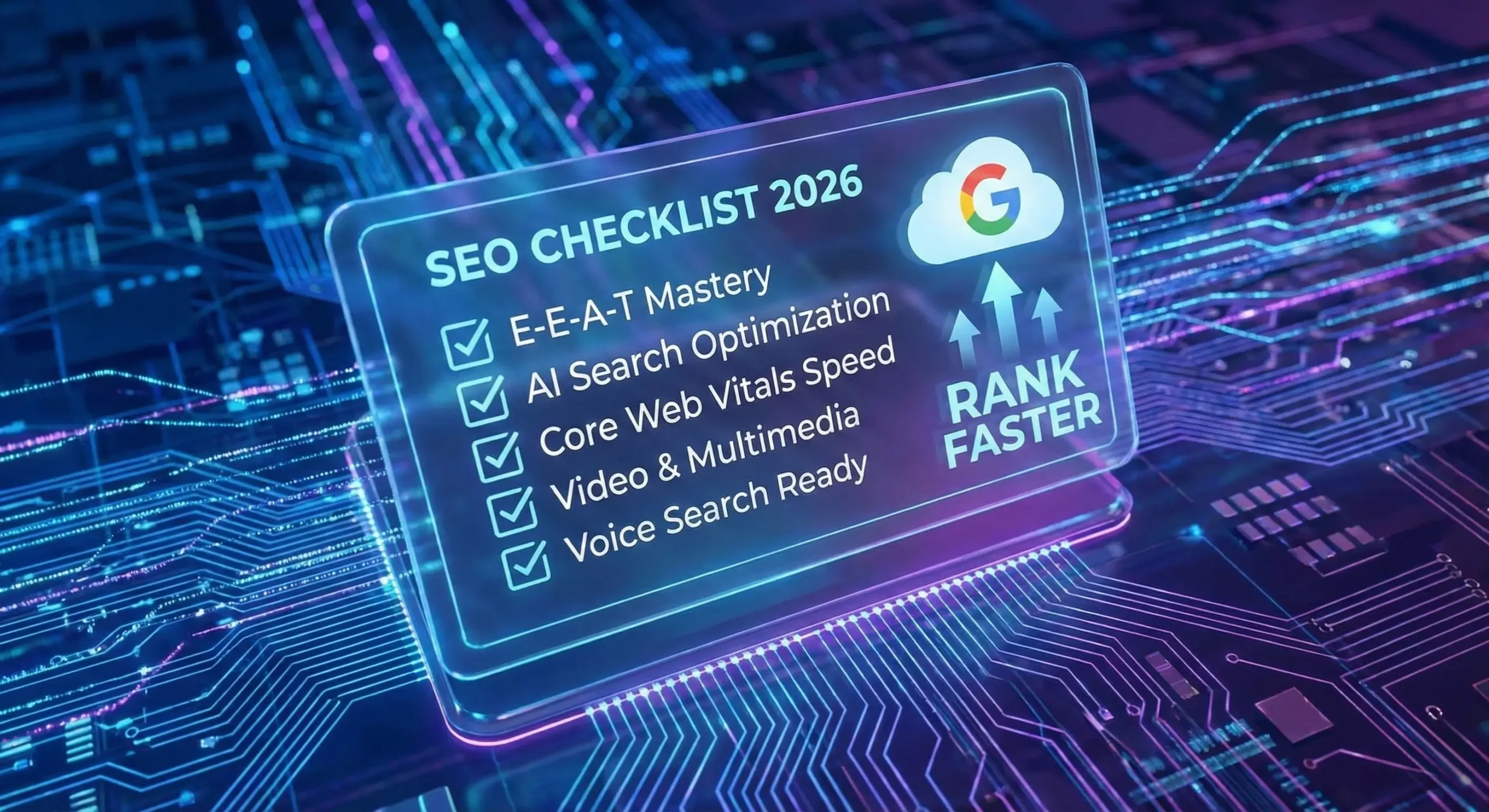
Search Engine Optimization has undergone a massive transformation as we enter 2026. The days of simply stuffing keywords into meta tags are long gone. Today, Google uses sophisticated artificial intelligence to understand not just what a user types, but what they actually need. To rank on Google faster in 2026, you must prioritize the user experience, demonstrate real-world expertise, and optimize for the Search Generative Experience. This comprehensive checklist provides a roadmap to help you navigate the new era of search and secure the top positions in the results pages.
Understanding the SEO Landscape in 2026
The search landscape in 2026 is dominated by the Search Generative Experience or SGE. Google now provides direct, AI-generated answers at the top of the search results for many queries. This shift means that visibility is no longer just about being the first blue link. It is about being the source that the AI cites in its summaries. To succeed, your content must be structured in a way that machines can easily parse while providing deep, human-centric value that an AI cannot replicate.
Zero-click searches have become more common because users often find their answers directly on the search page. However, this does not mean SEO is dead. It means the goal has shifted. Instead of just chasing clicks, you are now building brand authority and trust. When your brand is consistently cited by Google’s AI, you gain a level of credibility that naturally leads to higher-quality traffic and better conversion rates over time.
The Core Ranking Factors for 2026 Success
Google’s algorithm continues to refine how it identifies high-quality content. In 2026, the focus has narrowed down to a few critical areas that determine how quickly and how high you will rank.
Mastering E-E-A-T with a Focus on Experience
The E-E-A-T framework stands for Experience, Expertise, Authoritativeness, and Trustworthiness. While expertise and authority have been important for years, the “Experience” factor is now the most significant differentiator. With the rise of AI-generated content, Google is looking for proof that a real human actually performed the task, tested the product, or visited the location.
To rank faster, you should include personal anecdotes, original photos, and unique data in your articles. Avoid generic advice that can be found on dozens of other sites. Instead, explain what happened when you tried a specific strategy or share a case study from your own business. This type of first-hand experience is difficult for AI to fake and is highly rewarded by Google’s ranking systems.
Optimizing for User Intent and Semantic Search
Keywords still matter, but search intent is the true king in 2026. Google’s AI is excellent at determining whether a user wants to buy something, learn something, or find a specific website. If your page does not match the intent of the search query, you will never rank on the first page.
Semantic search means Google understands the context and relationships between different words. Instead of focusing on a single keyword, you should build topical authority. This involves creating content clusters where one main pillar page covers a broad topic and multiple sub-pages dive into specific details. This structure signals to Google that you are an expert on the entire subject, not just a single phrase.
Video and Multimedia Integration
In 2026, text-only pages struggle to compete with multimedia-rich content. Users have shorter attention spans and often prefer watching a short video or looking at an infographic rather than reading a long wall of text. Including high-quality videos and interactive elements can significantly increase the time users spend on your page.
Dwell time and engagement are major signals for Google. If a user lands on your site and immediately leaves, it tells the algorithm that your content was not helpful. By embedding a helpful video or a comparison table, you keep the user engaged. Ensure your videos are properly optimized with transcripts and schema markup so that Google can index the content within the video itself.
The Technical SEO Checklist for 2026
Technical SEO provides the foundation upon which your content sits. If your technical setup is flawed, even the best content in the world will struggle to rank.
Prioritizing Core Web Vitals and Page Speed
Page speed is no longer just a “nice to have” feature. In 2026, it is a critical requirement for ranking. Users expect pages to load almost instantly, especially on mobile devices. Google uses Core Web Vitals to measure the real-world experience of users on your site.
Focus on the Largest Contentful Paint, which measures how fast the main content of your page loads. You should also minimize layout shifts to ensure that buttons or text do not move around as the page is loading. Using modern image formats like WebP or AVIF and implementing a robust content delivery network can make a significant difference in your performance scores.
Mobile-First Indexing and Accessibility
Google uses the mobile version of your site for indexing and ranking. If your mobile site is missing content or is difficult to navigate, your rankings will suffer across all devices. Accessibility has also become a major factor. Your site should be easy to use for everyone, including people with visual or hearing impairments.
Use high-contrast colors, clear fonts, and descriptive alt text for all images. A site that is accessible is often a site that is well-structured for search engines as well. Make sure your menus are easy to tap on a small screen and that you avoid intrusive pop-ups that block the user’s view of the content.
Implementing Advanced Schema Markup
Structured data, or schema markup, helps search engines understand the specific elements of your page. In the age of AI search, this is more important than ever. By using schema, you can tell Google exactly which part of your page is a recipe, a review, a product price, or a frequently asked question.
In 2026, using FAQ schema and How-To schema is essential for appearing in rich snippets and AI summaries. It provides the structured information that AI models need to accurately represent your content. This increases your chances of being featured in the “People Also Ask” boxes and other prominent SERP features.
Common SEO Mistakes to Avoid in 2026
Many websites struggle because they are still using outdated tactics. To rank faster, you must avoid these common pitfalls that can lead to penalties or stagnant rankings.
One of the biggest mistakes is over-reliance on unedited AI content. While AI tools can help with outlines or brainstorming, publishing raw AI text often leads to “thin” content that lacks the necessary experience and unique insights. Google’s algorithms have become very efficient at identifying and devaluing generic, low-effort content.
Another mistake is keyword stuffing. In 2026, repeating a keyword too many times makes your content look like spam. Instead, focus on natural language and synonyms. Write for the human reader first and the search engine second. If your writing feels forced, it will likely drive users away, which harms your long-term rankings.
Finally, do not ignore your backlink profile. While the way we build links has changed, the importance of authority remains. Avoid buying low-quality links or participating in link schemes. A few high-quality links from reputable, relevant sites in your industry are worth more than thousands of spammy links from unrelated domains.
Best Practices and Actionable Tips to Rank Faster
If you want to see results quickly, you need a proactive and data-driven approach. Start by performing a comprehensive audit of your existing content.
First, identify your best-performing pages and see if they can be improved. Sometimes, adding a new section with updated statistics or a fresh video can give an old post a significant boost in the rankings. Look for pages that are ranking on the second page of Google and focus your optimization efforts there, as these are the easiest to move into the top positions.
Second, use internal linking strategically. Internal links help Google discover new pages and understand the hierarchy of your site. Use descriptive anchor text that tells the user and the search engine what the target page is about. For example, instead of using “click here,” use “advanced technical SEO strategies” to link to a related post.
Third, focus on local SEO if you have a physical presence. Ensure your Google Business Profile is fully optimized with current hours, photos, and customer reviews. Local search is becoming more integrated with AI, and having a strong local reputation can help you appear in localized AI overviews.
Finally, keep a close eye on your analytics. SEO is not a “set it and forget it” task. You must constantly monitor your performance and adjust your strategy based on what the data tells you. If a certain type of content is performing well, create more of it. If you notice a drop in traffic for a specific keyword, investigate whether a competitor has published something better or if the search intent has changed.
Final Thoughts on the Future of SEO
SEO in 2026 is about building a brand that people and search engines can trust. The technology behind search will continue to evolve, but the core mission remains the same: provide the best possible answer to the user’s question. By following this checklist, you are not just optimizing for an algorithm; you are optimizing for the humans who use that algorithm every day.
Ranking on Google faster requires a blend of technical excellence, creative storytelling, and a deep understanding of your audience. Focus on providing real-world experience, maintaining a lightning-fast website, and staying ahead of the latest AI trends. If you consistently provide value, the rankings will follow.
The future of search belongs to those who embrace change rather than fear it. Start implementing these strategies today to ensure your website remains a dominant force in the search results for years to come.