
Table of Contents
The modern kitchen is often a battlefield of competing priorities. Between managing a full-time career, family obligations, and the desire to eat something that does not come out of a cardboard box, the clock is rarely on your side. Most of us enter the kitchen with the best intentions, only to find ourselves overwhelmed by the sheer volume of chopping, simmering, and cleaning required to produce a single nutritious meal.
The secret to professional-level efficiency is not found in expensive gadgets or specialised culinary degrees. Instead, it lies in the systems and habits used by high-volume chefs to reduce friction. By implementing specific kitchen hacks to save time, you can reclaim hours of your week while actually enjoying the process of creation. This guide focuses on the high-impact changes that move the needle from frantic to functional.
Mastering the Art of Pre-Prep and Organisation
Efficiency in the kitchen begins long before the stove is ever turned on. A professional kitchen operates on the principle of readiness, ensuring that every movement is calculated to reduce wasted energy. For the home cook, this means rethinking how you approach your raw ingredients and your storage spaces.
The Power of Universal Mise en Place
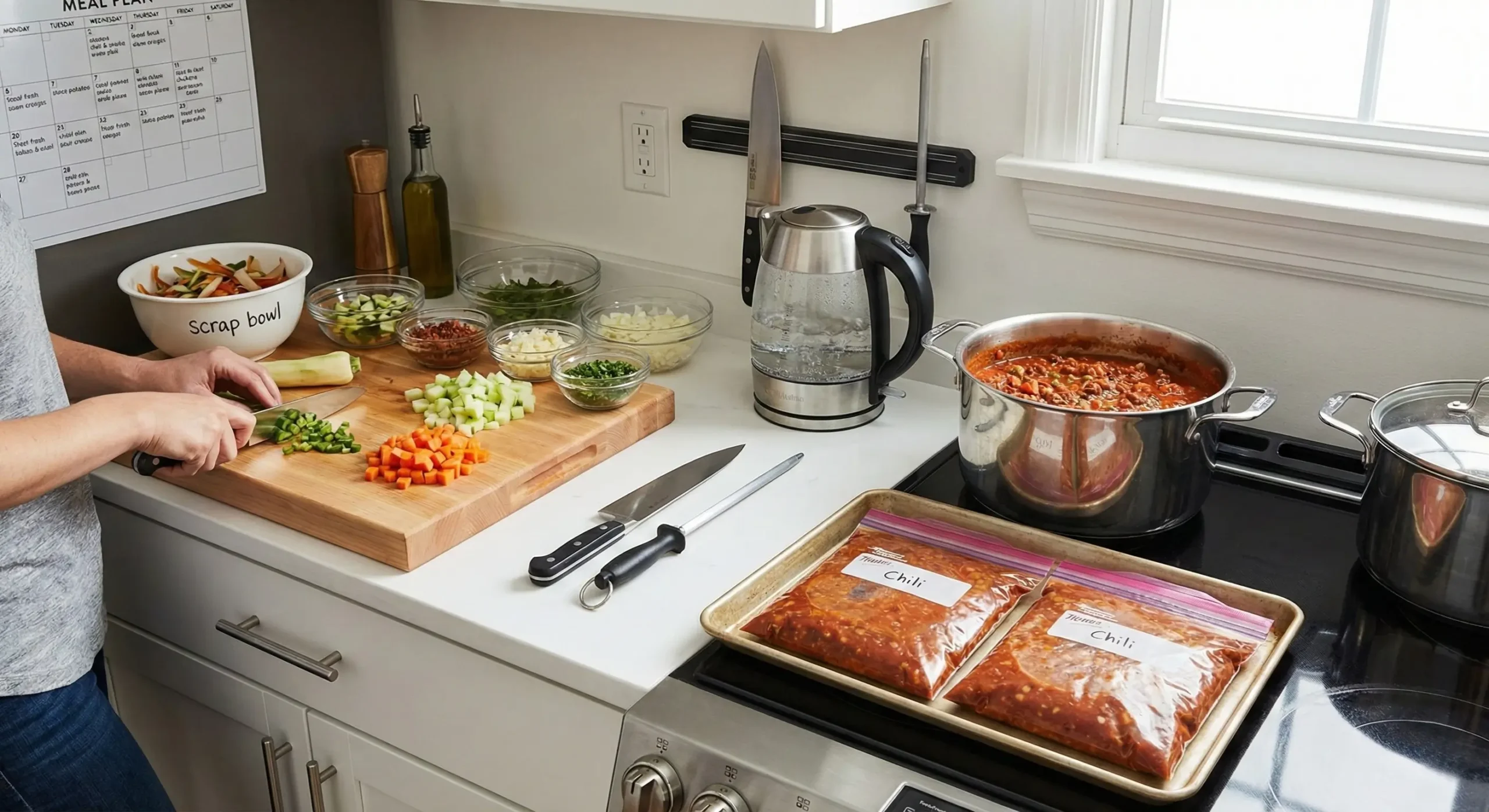
The French term mise en place translates to everything in its place. While often associated with fancy restaurant plating, it is the ultimate time-saving tool for the home cook. Before you start cooking, chop every vegetable, measure every spice, and set out every sauce. This prevents the frantic search for cumin while your onions are burning. It also allows you to clean as you go because you are not tethered to a cutting board while the pan is hot.
Uniform Chopping for Faster Cooking
One of the most overlooked kitchen hacks to save time is ensuring your ingredients are cut to a uniform size. When vegetables are of varying shapes and thicknesses, they cook at different rates. You end up waiting for the large chunks of carrot to soften while the small ones turn to mush. By mastering consistent dicing, you ensure everything finishes at the exact same moment, preventing the need for constant checking and reheating.
The Flat-Freeze Method for Storage
When freezing soups, stews, or sauces, avoid bulky plastic containers. Instead, use high-quality freezer bags. Fill them, squeeze out the excess air, and lay them flat on a baking sheet to freeze. Once solid, these thin bricks can be stacked like books on a shelf. Not only does this save immense amounts of space, but it also significantly reduces thawing time. A flat sheet of frozen chilli thaws in a fraction of the time it takes for a solid block in a deep container.
High-Efficiency Cooking Techniques
Once your preparation is complete, the focus shifts to the heat. Many home cooks lose time by using traditional methods that are not necessarily the most efficient for a busy weeknight. Adjusting your technique can shave minutes off every dish.
Utilizing Residual Heat
Most modern cookware, especially cast iron and heavy-bottomed stainless steel, retains heat long after the burner is turned off. You can often turn the stove off two or three minutes before a dish is finished. Covering the pan and letting the residual heat finish the job prevents overcooking and saves energy. This is particularly effective for delicate items like eggs or steamed greens.
The Double-Batch Strategy
If you are already chopping onions and browning meat for a bolognese, it takes negligible extra effort to double the quantity. One batch is for tonight, and the second is for the freezer or later in the week. This is the foundation of an effective guide to meal planning. The time spent cleaning the pan and the food processor is the same whether you cook one pound of meat or three.
Boiling Water Efficiency
Waiting for a large pot of water to boil is one of the biggest time-wasters in the kitchen. To speed this up, use an electric kettle to boil the water first, then pour it into your pot. Electric kettles are far more efficient at heating water than a stovetop burner. Additionally, always keep the lid on your pot while bringing water to a boil to trap the heat and accelerate the process.
Cleanup as You Go: The Professional Secret
The most demoralising part of cooking is the mountain of dishes waiting for you at the end of the night. Professional chefs avoid this by integrating cleaning into their workflow. If you change your perspective on cleanup, the entire cooking experience becomes less stressful.
The Scrap Bowl Technique
Instead of walking back and forth to the trash can or compost bin every time you peel a potato or trim a leek, keep a large bowl on your workstation. Toss all organic waste into this bowl as you work. When you are finished with your prep, you make one single trip to the bin. This keeps your workspace clear and reduces the physical steps you take during meal preparation.
Liners and Parchment Paper
Cleaning roasted sheet pans is a chore that many avoid. By using parchment paper or silicone baking mats, you can often simply wipe the pan down and put it away. For high-heat roasting where drippings might burn, heavy-duty aluminium foil is an essential tool. The goal is to prevent food from ever making direct contact with the metal surface of your pans.
The One-Pot Philosophy
Whenever possible, adapt recipes to be cooked in a single vessel. Modern Dutch ovens and deep skillets are versatile enough to handle searing, braising, and boiling. By reducing the number of pots used, you reduce the time spent at the sink. Searching for one-pot meal ideas can transform your weekday routine from a multi-pan nightmare into a streamlined process.
Common Mistakes Beginners Face
Even with the best intentions, many people fall into habits that actually increase their time in the kitchen. Recognising these pitfalls is the first step toward correcting them.
- Over-reliance on specialised gadgets: While a strawberry huller or a garlic press might seem helpful, they often take longer to find and clean than it would to simply use a chef’s knife. Stick to high-quality, versatile tools.
- Crowding the pan: If you put too much food in a pan at once, the temperature drops and the food steams rather than browns. This takes longer to cook and results in a less flavorful meal. Cook in batches if necessary.
- Starting with a cold pan: Many people add food to a cold skillet. This leads to sticking and uneven cooking. Always allow your pan to preheat, which actually speeds up the total cooking time once the food hits the surface.
- Ignoring food safety during thawing: Trying to rush the thawing process by leaving meat on the counter is a common error. Understanding the danger zone for food temperatures is vital for safety, and using the correct cold-water thaw method is actually faster and safer than leaving it out at room temperature.
Best Practices for a Time-Saving Kitchen
Creating a permanent system of efficiency requires a bit of upfront work, but the payoff is substantial. Use these actionable steps to audit your current kitchen habits.
1. Keep Your Knives Sharp
A dull knife is a slow knife. It requires more force, causes more slips, and results in jagged cuts that cook unevenly. Invest in a professional sharpening service once a year and use a honing rod regularly. You will be amazed at how much faster you can work through a pile of vegetables when your tools are performing at their peak. This is a core component of essential knife skills for any home cook.
2. Organise Your Most-Used Items
Items you use every day, such as olive oil, salt, pepper, and your favourite spatula, should be within arm’s reach of the stove. If you have to dig through a cluttered cabinet to find the tongs every time you flip meat, you are losing valuable seconds and increasing your stress levels. Look into the best kitchen organisation tools to help create a dedicated zone for your high-frequency items.
3. Process Produce Immediately
When you return from the grocery store, try to wash and dry your greens and chop hardy vegetables immediately. If the onions are already diced and the lettuce is already clean in the fridge, the barrier to starting dinner is significantly lowered. It transforms a forty-minute process into a twenty-minute one.
4. Read the Full Recipe Twice
This may sound like it takes more time, but reading the entire recipe before you start prevents “hidden” time sinks. There is nothing worse than getting halfway through a dish only to realize the meat needs to marinate for four hours or the oven needs to be at a specific temperature you haven’t reached yet.
Final Thoughts
Efficiency in the kitchen is not about rushing; it is about removing the obstacles that slow you down. By implementing these kitchen hacks to save time, you shift your focus from the drudgery of preparation to the creativity of cooking. Start small by adopting one or two of these habits, such as the scrap bowl or the flat-freeze method, and notice how much calmer your evenings become. A well-managed kitchen is a sustainable kitchen, allowing you to serve high-quality meals without the burnout that often accompanies home cooking.