
Table of Contents
The aroma of toasted cumin and the vibrant hue of turmeric have a way of making any kitchen feel like a sanctuary. For many home cooks, however, the prospect of making Indian food feels like a journey into a labyrinth of complex spices and multi-day preparations. This perception is one of the greatest myths in the culinary world. While high-end restaurant dishes like Rogan Josh require hours of slow-cooking, the heart of Indian home cooking is built on simplicity, speed, and soul.
Cooking Indian food at home is not about memorizing a hundred different ingredients. It is about understanding how a few key elements interact to create a symphony of flavour. If you can sauté an onion and boil a pot of water, you already possess the foundational skills to master easy Indian recipes. This guide is designed to move you past the intimidation factor and into a routine where a fresh, fragrant curry is your Tuesday night standard rather than an expensive weekend splurge.
In the following sections, we will break down the essential pantry, the core techniques that define the cuisine, and a selection of foolproof recipes that deliver maximum flavour with minimum stress. Whether you are looking for a quick vegetarian dal or a simplified version of a classic chicken dish, these methods are tested for the modern home kitchen.
The Essential Indian Pantry for Beginners
Before you turn on the stove, you need to audit your spice cabinet. The biggest mistake beginners make is buying those pre-mixed “curry powders” found in the baking aisle. In traditional Indian cooking, “curry” is a broad term for a sauced dish, not a specific spice. To achieve authentic results, you only need five or six individual spices that will serve as your building blocks.
- Turmeric Powder: The source of that iconic golden colour and a mild, earthy bitterness.
- Cumin Seeds: Used at the start of cooking to infuse the oil with a nutty, smoky aroma.
- Coriander Powder: The citrusy, floral backbone of almost every Indian gravy.
- Garam Masala: A finishing blend of warming spices like cinnamon, cardamom, and cloves.
- Kashmiri Red Chilli Powder: Provides a deep red colour and mild heat without overwhelming the palate.
- Ginger and Garlic: Fresh is always better. Most recipes begin with a paste made from equal parts of both.
Having these items on hand ensures that you can whip up easy Indian recipes at a moment’s notice. While fresh herbs like cilantro add a final flourish, the dry spices are the true heavy lifters of the flavour profile. These spices also offer significant health benefits, particularly turmeric, which is well-known for its anti-inflammatory properties and general wellness support.
Mastering the Foundation: The Perfect Masala Base
Almost every North Indian curry begins with a “masala”—a cooked-down mixture of aromatics and spices. If you master this process, you can cook 80 per cent of the Indian recipes you see online. The process is rhythmic and requires a bit of patience, but it is far from difficult. The secret lies in the stages of cooking the onions.
The Art of the Onion
In Western cooking, we often sweat onions until they are translucent. In Indian cooking, we generally push them further. For a rich, deep gravy, you want your onions to reach a golden brown stage. This caramelisation provides the sweetness that balances the heat of the chillies and the acidity of the tomatoes. If you rush this step, your sauce will taste raw and acidic rather than balanced and savoury.
Blooming Your Spices
Spices are fat-soluble. This means their flavours are locked inside and are best released when toasted in hot oil or ghee. When you add your ground spices to the pan, do so after the onions and ginger-garlic paste have cooked. Fry them for just 30 to 60 seconds. You will know they are ready when the kitchen suddenly smells like an artisan spice market. Be careful not to burn them; if the mixture looks too dry, add a splash of water to create a thick paste.
Easy Indian Recipes to Start Your Journey
Now that the groundwork is laid, let us look at specific dishes that are perfect for beginners. These recipes use minimal equipment—usually just one heavy-bottomed pot or a deep skillet—and focus on high-impact ingredients.
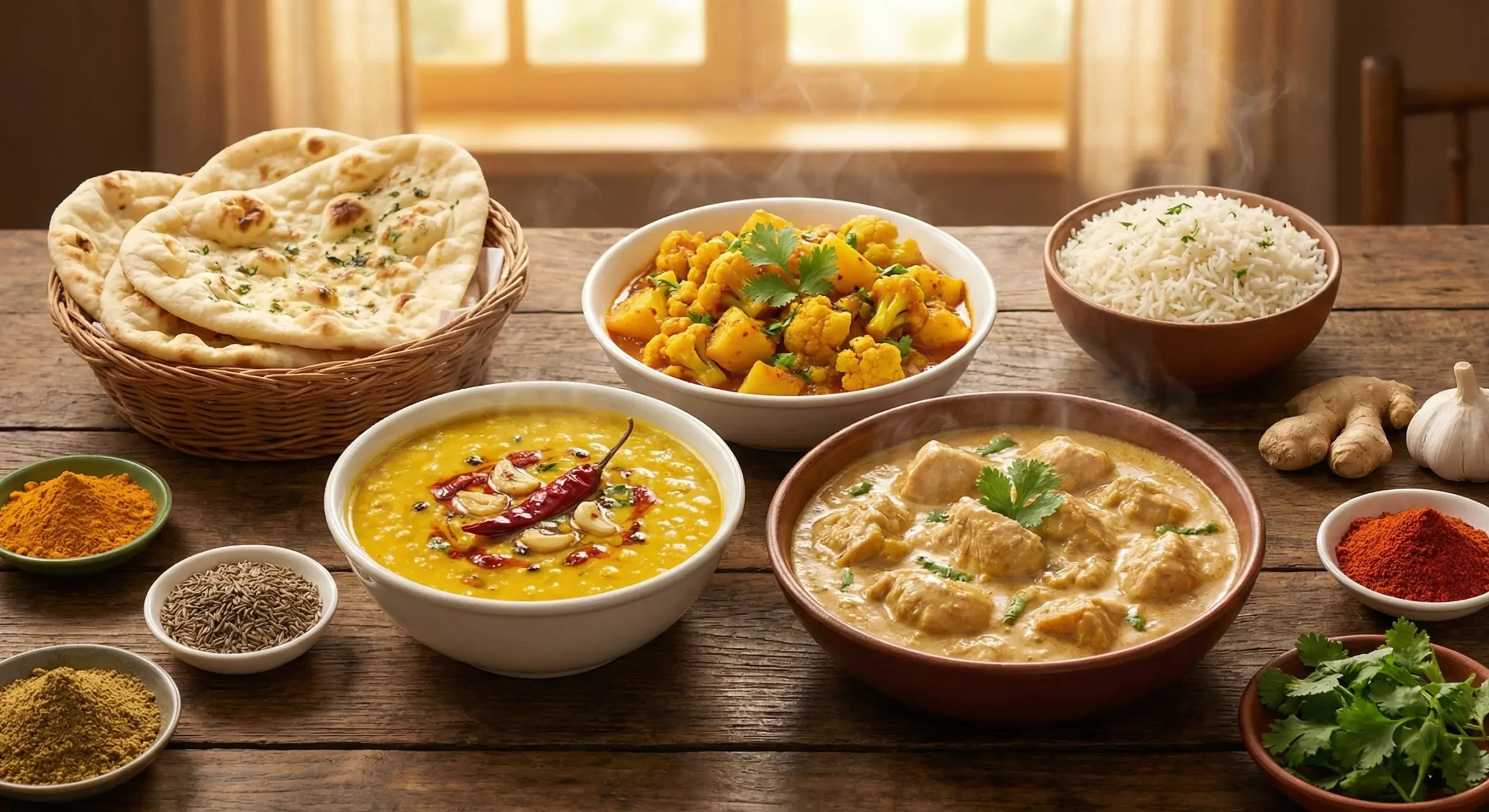
1. Yellow Dal Tadka (Lentil Curry)
Dal is the ultimate comfort food. It is nutritious, incredibly cheap, and requires almost no technical skill. Red lentils (masoor dal) or yellow split peas (toor dal) are the best choices for beginners because they cook quickly and break down into a creamy consistency.
- Boil one cup of lentils with three cups of water, a pinch of salt, and half a teaspoon of turmeric until soft.
- In a separate small pan, heat a tablespoon of oil or ghee. Add cumin seeds and let them sizzle.
- Add chopped garlic and dried red chilies to the oil until the garlic turns golden.
- Pour this hot oil mixture (the “tadka”) over the cooked lentils. The sizzle is the sound of success.
2. Aloo Gobi (Spiced Potatoes and Cauliflower)
This is a “dry” curry, meaning there is no heavy gravy. It relies on the steam from the vegetables and a coating of spices to create flavour. It is an excellent side dish or a light main when paired with flatbread. The trick here is to cut the potatoes smaller than the cauliflower florets so they finish cooking at the same time.
3. Quick Coconut Chicken Curry
If you prefer a creamier, South Indian-inspired flavour, coconut milk is your best friend. This recipe skips the long marination times of traditional tandoori dishes. Simply sauté your onion and spice base, add bite-sized chicken pieces, and stir in a can of full-fat coconut milk. Simmer until the chicken is tender, and the sauce has thickened slightly. It is faster than ordering takeout and significantly more rewarding.
Common Mistakes Beginners Face
Even with the best intentions, certain pitfalls can derail your attempt at easy Indian recipes. Recognising these early will save your dinner and your confidence. A common error is “crowding the pan.” If you put too many vegetables in the pot at once, they will steam rather than sauté, resulting in a mushy texture rather than those beautiful charred edges.
Another frequent mistake is the timing of salt. In Indian cooking, salt is often added in stages—first to help the onions break down, and later to season the finished sauce. Always taste your food at the end. Indian spices are bold, and they require an adequate amount of salt to “pop.” If your curry tastes “flat” or “earthy” but not exciting, it usually just needs a bit more salt or a squeeze of lemon juice for acidity.
Finally, do not be afraid of the oil. While we all want to eat healthily, oil is the vehicle for flavour in Indian cuisine. Without enough fat in the pan, the spices will not bloom properly, and they can end up tasting gritty or bitter. You can always skim off excess oil at the end, but you need it during the cooking process to unlock the aromatics.
Actionable Tips for Restaurant-Quality Results
If you want to take your home-cooked meals from “good” to “expert level,” incorporate these simple habits into your routine. These are the small details that professional chefs use to create depth of flavour.
- The Power of Fresh Ginger-Garlic Paste: Avoid the jarred stuff if possible. Smashing fresh ginger and garlic in a mortar and pestle takes two minutes but improves the flavor by twenty percent.
- The Finishing Touch: Always add a pinch of Garam Masala and a handful of fresh cilantro at the very end of the cooking process. The heat of the dish will release the volatile oils in the Garam Masala without cooking away its delicate aroma.
- Rest Your Curries: Much like a good stew, an Indian curry often tastes better twenty minutes after it has stopped cooking. This allows the spices to penetrate the proteins and vegetables thoroughly.
- Sugar as a Balancer: If your tomato-based gravy feels too sharp, add a half-teaspoon of sugar. It won’t make the dish sweet, but it will mellow the acidity of the tomatoes and balance the heat.
Conclusion: Your Kitchen, Your Rules
The beauty of easy Indian recipes is their adaptability. Once you understand the basic template—the sizzling seeds, the golden onions, the bloomed spices, and the simmer—you can apply it to almost anything in your refrigerator. Indian cooking is a living tradition that thrives on local ingredients and personal preferences. There is no “perfect” curry, only the one that tastes right to you and your family.
Start with the dal. It is the most forgiving entry point and will teach you the importance of the “tadka” or tempering technique. From there, move on to dry vegetable dishes and then into the world of creamy gravies. By the time you have made three or four of these dishes, you will realise that the “complexity” of Indian food was never about difficulty—it was simply about a different, more fragrant way of looking at the ingredients you already know.
Cooking is a skill, but it is also an act of exploration. With these easy Indian recipes in your repertoire, you are no longer just a spectator of international flavours; you are a creator of them. Put on the rice, toast your spices, and enjoy the process of bringing the vibrant tastes of India into your home.