Table of Contents
For decades, the traditional Indian thali has been hailed by nutritionists as one of the most balanced meal structures in the world. However, as our lifestyles have shifted from the active fields to sedentary office desks, the way we consume our heritage grains and spices must also evolve. A daily indian diet chart for healthy living is no longer just about filling the stomach; it is about fueling the body with precision while respecting the diverse culinary landscape of the subcontinent.
The challenge today is not a lack of food, but a lack of nutrient density. We often find ourselves caught in a cycle of high-carb breakfasts and late-night heavy dinners that contradict our biological rhythms. By understanding the synergy of Indian ingredients—such as the pairing of rice and lentils to form a complete protein—we can reclaim our health without abandoning the flavours we love. This guide provides a structured, science-backed approach to navigating an Indian kitchen for optimal wellness.
Whether you are a busy professional in Bangalore or a homemaker in Delhi, the principles of a balanced Indian diet remain the same. It is about proportion, timing, and the intelligent use of indigenous superfoods. In the following sections, we will break down exactly what a day of healthy Indian eating looks like, ensuring you stay energized from your morning tea to your final meal of the day.
The Foundations of a Balanced Indian Plate
To build a daily indian diet chart for healthy living, one must first understand the macro-composition of a typical meal. Traditionally, Indian diets have been grain-heavy. While grains like wheat and rice are essential for energy, the modern professional often consumes them in excess relative to their physical activity levels. The goal is to shift the ratio, making vegetables and proteins the stars of the plate.
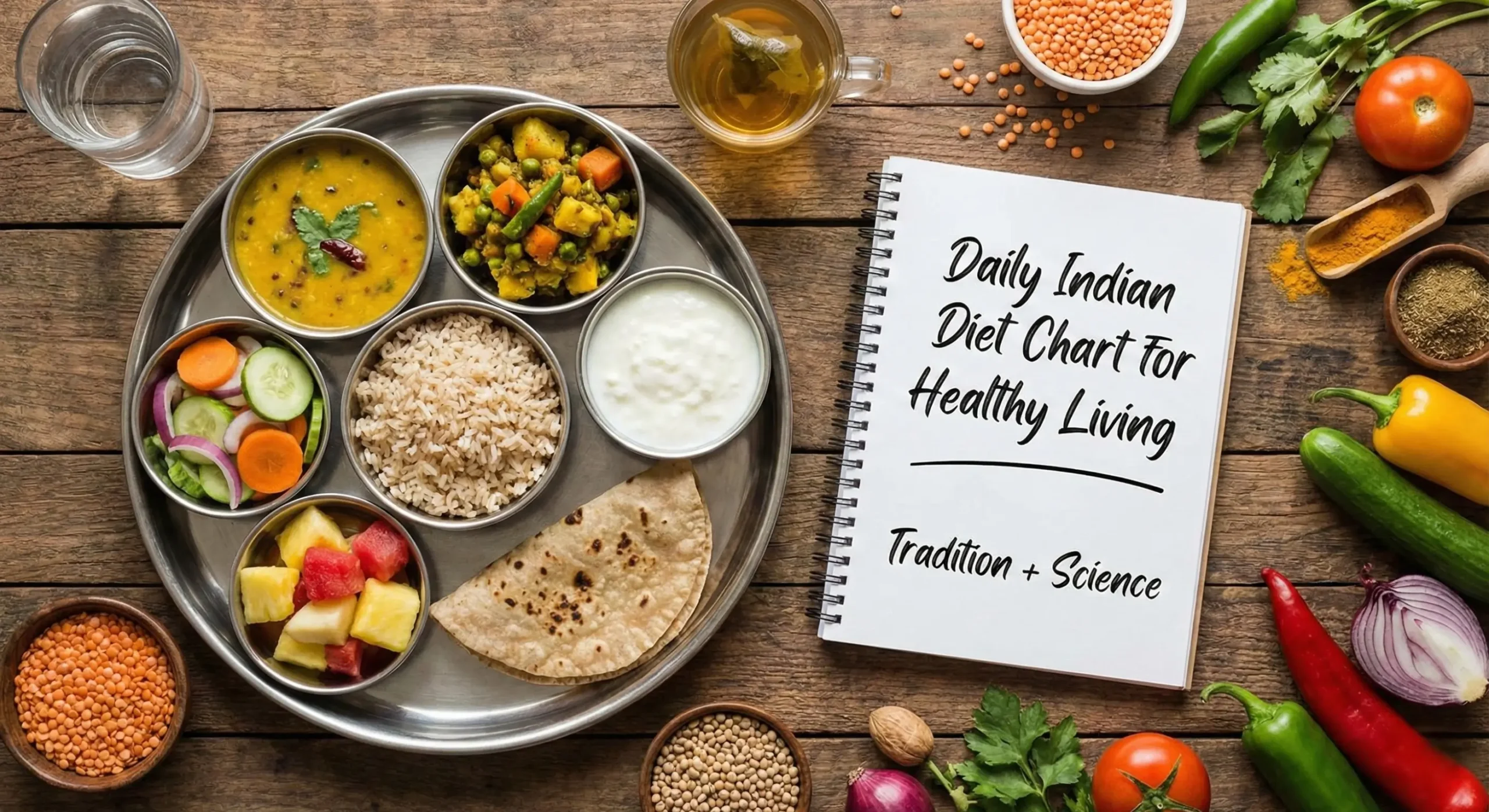
A balanced plate should ideally consist of 50 percent seasonal vegetables, 25 percent protein (in the form of lentils, legumes, dairy, or lean meats), and 25 percent complex carbohydrates. This structure ensures a steady release of glucose into the bloodstream, preventing the energy crashes that lead to mid-afternoon sugar cravings. Furthermore, the inclusion of healthy fats—like a small dollop of A2 ghee or cold-pressed oils—is vital for the absorption of fat-soluble vitamins.
Spices are the silent heroes of Indian nutrition. Beyond flavor, ingredients like turmeric, cumin, and black pepper serve as anti-inflammatory agents and digestive aids. Incorporating these systematically into your daily routine is not just a culinary tradition; it is a metabolic necessity. The following chart outlines a sustainable way to distribute these nutrients throughout your day.
The Daily Indian Diet Chart Breakdown
Consistency is the hallmark of any successful nutrition plan. This chart is designed to be flexible enough to accommodate regional preferences while maintaining a strict focus on metabolic health. It emphasises the importance of starting early and ending light.
Early Morning: Awakening the Metabolism
Upon waking, your body is in a dehydrated and slightly acidic state. Instead of reaching for a strong cup of milk tea or coffee immediately, which can spike cortisol and irritate the stomach lining, start with alkaline-forming rituals.
- The Hydration Hit: A glass of lukewarm water with lemon or a teaspoon of soaked fenugreek (methi) seeds. This helps in flushing out toxins and improving insulin sensitivity.
- Natural Energy: Five soaked almonds and two walnuts. Soaking removes the anti-nutrients like tannins and phytic acid, making the minerals more bio-available.
Breakfast: The High-Protein Kickstart
In many Indian households, breakfast is often a carb-heavy affair consisting of parathas or white rice-based idlis. To optimize for healthy living, we must increase the protein content of the first meal to ensure satiety and muscle maintenance.
- Option 1: Moong dal chilla (savoury pancakes) stuffed with crumbled paneer and finely chopped vegetables.
- Option 2: Vegetable Poha or Upma, but with a twist—double the quantity of peas, peanuts, and carrots, and halve the quantity of beaten rice or semolina.
- Option 3: Two boiled eggs with a side of sprouted mung bean salad seasoned with lemon and black salt.
Lunch: The Traditional Thali Reimagined
Lunch should be your largest meal, as your digestive fire (Agni) is strongest during the middle of the day. The key is to avoid the “carb coma” by managing portions of rice and roti. This is where you can truly implement the best foods to eat for weight loss within an Indian context.
- The Grain: One medium-sized multigrain roti (missi roti) or a small bowl of unpolished red or brown rice.
- The Protein: A generous bowl of dal (tadka with minimal oil) or a portion of curd (dahi). For non-vegetarians, grilled fish or chicken curry with a light gravy.
- The Fiber: At least two types of seasonal “sabzi” (vegetables) like okra, spinach, or cauliflower. A large side of fresh kachumber salad (cucumber, tomato, and onion) is mandatory for digestive enzymes.
Evening Snack: Beating the Biscuit Trap
The time between 4:00 PM and 6:00 PM is where most diets fail. The temptation to pair tea with fried snacks or biscuits is strong. A healthy Indian diet chart replaces these processed calories with whole-food alternatives.
- Roasted Makhana: Foxnuts roasted in a hint of ghee and turmeric are low in calories and high in minerals.
- Chana Chaat: Boiled chickpeas with chopped onions, tomatoes, and a dash of chaat masala.
- Beverage: Ginger tea or Masala tea without refined sugar. Use a small amount of jaggery or stevia if necessary.
Dinner: Light, Lean, and Early
The Indian tradition of late-night heavy dinners is a primary driver of metabolic disorders. Your last meal should be consumed at least 2.5 to 3 hours before bed and should be the lightest of the day. Focusing on easy-to-digest proteins and vegetables helps the body focus on repair during sleep rather than active digestion.
- Option 1: A bowl of mixed vegetable soup or a clear chicken soup, followed by a small portion of sautéed paneer or tofu.
- Option 2: Dal khichdi made with a 2:1 ratio of lentils to rice, loaded with spinach or bottle gourd (lauki).
- Option 3: Grilled tandoori vegetables or a light soya bean curry without heavy cream or cashew pastes.
Common Mistakes in the Indian Diet
Many individuals believe they are eating healthy because they eat “home-cooked food,” yet they still struggle with weight and energy levels. This often stems from invisible nutritional errors that are deeply embedded in modern Indian cooking habits.
One major challenge is the excessive use of refined oils. Even the healthiest vegetable can become a calorie bomb if it is swimming in oil. Using non-stick cookware or traditional cast iron can significantly reduce the need for oil during the “tadka” process. Another mistake is the hidden sugar in our daily tea and coffee. Consuming three cups of tea with two teaspoons of sugar each adds up to nearly 30 grams of sugar a day, which is the maximum recommended limit for adults.
Furthermore, the “white” dominance in our diet—white rice, white flour (maida), and white sugar—lacks the fibre necessary for a healthy gut microbiome. Switching to whole grains and unrefined sweeteners can make a massive difference in how you feel daily. Finally, the habit of drinking water immediately after a meal can dilute stomach acid and slow down digestion. It is best to wait at least 30 to 45 minutes after eating before hydrating.
Best Practices for Sustained Healthy Living
Transitioning to a daily indian diet chart for healthy living is not about a short-term “cleanse.” It is about adopting habits that make healthy eating the path of least resistance. Here are some actionable steps to ensure your success:
- Practice Pre-Loading: Eat a small bowl of salad or drink a glass of buttermilk 15 minutes before your main meals. This pre-fills the stomach and prevents overeating the main course.
- Focus on Regional and Seasonal: Nature provides what your body needs for the specific climate. Eat mangoes in summer for hydration and energy, and bajra or sesame in winter for warmth.
- The Power of Fermentation: Incorporate traditional fermented foods like homemade curd, idli, or dhokla. These are rich in natural probiotics that support immunity and mental health.
- Mindful Eating: Avoid screens while eating. The Indian practice of eating with hands is actually a form of mindfulness that connects the senses to the food, often leading to better portion control.
Following a balanced diet based on local guidelines ensures that you are getting the specific micronutrients required for the Indian phenotype. This includes paying attention to Vitamin B12 and Vitamin D, which are commonly deficient in the Indian population.
Final Thoughts
A daily indian diet chart for healthy living is a celebration of our culinary heritage, adapted for the requirements of the 21st century. It is a system that values flavour as much as it values fibre. By making small, intentional shifts—like increasing your protein, reducing refined grains, and respecting meal timings—you can unlock a level of vitality that no supplement can provide.
Healthy living is not a destination but a continuous journey of making better choices. Your kitchen is your first pharmacy, and your plate is your most powerful tool for change. Start tomorrow morning with a glass of water and a handful of nuts, and let the transformation begin.