Table of Contents
The term cloud computing has become so ubiquitous that we often forget most people still find it incredibly vague. You use it every time you check your email, stream a movie, or save a photo to your phone, yet if someone asked you to point to the cloud, you probably could not do it.
For years, the cloud was marketed as a mysterious digital ether where data just happened. In 2026, that mystery is a liability. Understanding the cloud is no longer just for IT professionals; it is the fundamental baseline for how we live, work, and innovate in a hyper-connected world.
If you feel like you are late to the party, you aren’t. While the infrastructure has been building for decades, the way we use the cloud is currently undergoing a massive shift. This guide is designed to strip away the jargon and show you exactly why the cloud matters right now.
What Cloud Computing Actually Is
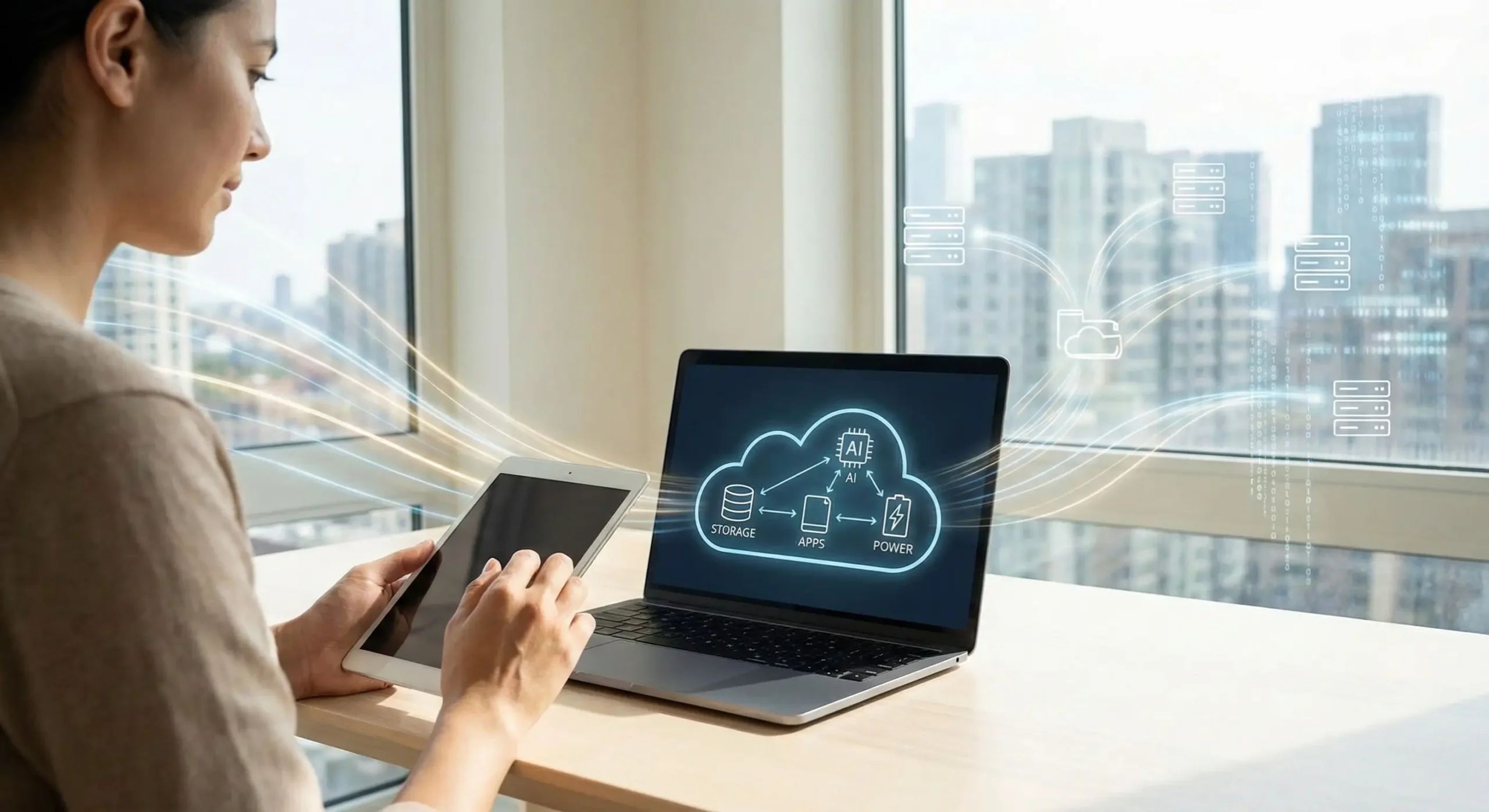
At its most basic level, cloud computing is simply using someone else’s computer to do your work. Instead of running applications or storing data on your own computer’s hard drive or a local server in your office, you access those services over the internet.
Think of it like the power grid in your home. You do not own a massive power plant in your backyard to keep the lights on. Instead, you plug into a global infrastructure and pay for exactly what you use. The cloud is the utility company for the digital age.
The computers you are using are housed in massive data centers owned by providers like Amazon, Microsoft, or Google. These facilities are filled with thousands of high-powered servers, and when you log into a cloud service, you are essentially renting a tiny slice of that power.
The Three Pillars of Cloud Services
To understand the cloud, you need to understand the three primary ways it is delivered. You will often hear these referred to as the stack.
Infrastructure as a Service or IaaS
IaaS is the foundation. It provides the raw building blocks of computing: servers, storage, and networking. If you were building a house, IaaS would be the land and the utilities. You are responsible for everything else, but you do not have to worry about the physical hardware.
Platform as a Service or PaaS
PaaS is a step up. It provides the tools and framework for developers to build applications without worrying about the underlying infrastructure. Using the house analogy, this is like buying a pre-built frame with all the plumbing and wiring installed. You just need to choose the paint and furniture.
Software as a Service or SaaS
This is the version of the cloud most people interact with every day. SaaS is a completed application delivered through a web browser or app. Examples include Google Workspace, Slack, or Netflix. You do not build anything; you just use the service.
Why the Cloud Matters More in 2026
We have moved past the era where the cloud was just about storage. In 2026, the cloud is the engine behind Artificial Intelligence and real-time data processing. Without the cloud, the AI tools we rely on today would be impossible to run on a standard laptop.
The cloud allows for unprecedented scalability. A small startup can launch an app today and support millions of users tomorrow without ever buying a single physical server. This democratization of technology has leveled the playing field, allowing anyone with an idea to access the same computing power as a Fortune 500 company.
Furthermore, the shift toward remote and hybrid work has made the cloud the glue of the modern economy. It ensures that your files and tools are available wherever you are, on any device, at any time.
Public Private and Hybrid Clouds Explained
Not all clouds are created equal. Depending on a company’s needs for security, cost, and control, they might choose different deployment models.
The Public Cloud
The public cloud is owned and operated by third-party providers. You share the same hardware and network devices with other organizations, though your data is kept strictly separate. It is cost-effective and requires zero maintenance on your part.
The Private Cloud
A private cloud is used exclusively by one organization. It can be physically located at your on-site data center or hosted by a provider. This offers the highest level of security and control, which is why it is often favored by government agencies or financial institutions.
The Hybrid Cloud
This is the trend we are seeing most in 2026. A hybrid cloud combines public and private clouds, allowing data and applications to move between them. This gives businesses the flexibility to keep sensitive data on a private server while using the public cloud for high-volume tasks.
What Most People Get Wrong About the Cloud
One of the biggest misconceptions is that the cloud is inherently less secure than local storage. Many people feel safer knowing their data is on a hard drive they can physically touch.
In reality, major cloud providers spend billions of dollars every year on security measures that no individual or small business could ever afford. They have teams of the world’s best security experts monitoring for threats 24/7. Your data is likely much safer in a professional data center than it is on a laptop that could be lost, stolen, or damaged.
Another common myth is that the cloud is just a place to store files. While storage is a part of it, the real value of the cloud is its computing power. It allows for complex data analysis, machine learning, and global collaboration that would be impossible with traditional hardware.
What Actually Works Today in Cloud Strategy
If you are looking to leverage the cloud today, the focus has shifted from simple migration to optimization. In the early days, companies would just move their existing mess to the cloud. We call this lift and shift, and it is rarely efficient.
Today, the most successful individuals and businesses are adopting a cloud-native approach. This means designing processes and applications specifically to take advantage of cloud features like auto-scaling and serverless computing.
Serverless computing is a major trend right now. It allows you to run code without managing any servers at all. You only pay for the exact millisecond your code is running. This eliminates waste and allows for incredible speed in development.
Final Thoughts and the Future of the Cloud
As we look toward the end of this decade, the cloud will become even more invisible and integrated into our lives. We are moving toward a world of edge computing, where the cloud’s power is brought closer to where the data is actually created—like in your car, your watch, or your smart home devices.
The cloud is no longer a destination you visit; it is the environment in which we all live. For beginners, the goal is not to understand every technical detail of how a server works, but to understand how to leverage these tools to work smarter and faster.
The cloud has removed the barriers to entry for innovation. The only limit now is your curiosity and your willingness to learn how to use the tools at your disposal.