
Table of Contents
The concept of sustainable living often conjures up images of off-grid cabins, expensive solar arrays, and a lifestyle that feels more like a full-time job than a home life. In reality, the most impactful environmental shifts happen within the four walls of an average house, driven by small, repeatable actions. You do not need to overhaul your entire existence overnight to make a significant difference; you simply need a strategy for incremental improvement.
Today, sustainability is as much about economics and personal well-being as it is about planetary health. With rising utility costs and a growing awareness of how our environments affect our stress levels, making sustainable living simple changes is a pragmatic choice for the modern household. It is about doing more with less and finding a balance that respects both your schedule and your values.
In this guide, we will move past the vague platitudes of being green and look at the actual physics of a household. We will explore how energy flows, how waste is generated, and how you can intercept these processes to create a more efficient, cost-effective, and environmentally responsible home. This is not about perfection; it is about intentionality.
The Psychology of Sustainable Habit Formation
The primary reason most eco-friendly resolutions fail is that they are too ambitious. We decide to stop using plastic entirely on a Tuesday morning, only to find ourselves at a grocery store on Wednesday realizing that almost everything is wrapped in film. The key to sustainable living, simple changes, is to lower the barrier to entry so that the green choice becomes the easiest choice.
When you focus on systems rather than willpower, sustainability becomes automatic. Instead of remembering to turn off the lights, you install a motion sensor. Instead of remembering to bring a reusable bag, you keep one clipped to your car keys. We are looking for the path of least resistance that still leads to a positive outcome.
By treating your home as a laboratory for efficiency, you can find joy in the optimisation process. There is a quiet satisfaction in seeing a lower electricity bill or realising your trash can takes twice as long to fill as it used to. These are the tangible rewards that keep a sustainable lifestyle moving forward.
Optimising Home Energy Efficiency
Energy consumption is often the largest environmental footprint a household leaves behind. It is also the area where you can see the fastest return on investment in terms of actual cash saved. You do not need a degree in electrical engineering to understand where your home is leaking resources.
Managing the Thermal Envelope
A significant portion of your energy bill goes toward fighting the outside world. Whether you are heating your home in the winter or cooling it in the summer, your HVAC system is constantly working to maintain a specific temperature. Sustainable living, simple changes start with ensuring that air stays where it belongs.
Check the seals around your windows and doors. A simple bead of caulk or a new weatherstrip can prevent the equivalent of leaving a window open year-round. Additionally, consider the role of heavy curtains. They act as a thermal barrier, keeping the sun out during peak heat and trapping warmth during the cold months. It is an old-fashioned solution that remains incredibly effective in the high-tech world of 2026.
The Rise of the Smart Thermostat
If you are still manually adjusting your thermostat, you are likely wasting a considerable amount of energy. Smart thermostats learn your schedule and adjust the temperature when you are asleep or away. This ensures you are not paying to keep an empty house perfectly climate-controlled. Most modern units pay for themselves in energy savings within the first year of operation.
Rethinking Waste and the Circular Kitchen
The kitchen is the heart of the home, but it is also the primary source of household waste. Between food scraps, packaging, and cleaning supplies, the kitchen offers the most fertile ground for sustainable living, simple changes. The goal here is to move away from a linear “buy-use-toss” model toward a more circular approach.
Strategic Meal Planning and Food Waste
Food waste is a double-edged sword: it wastes the resources used to produce the food and produces methane in landfills. The most sustainable thing you can do in the kitchen is to eat what you buy. This requires a shift in how we shop. Buying in bulk is only sustainable if you actually consume the product before it expires.
Try “reverse meal planning.” Instead of choosing a recipe and then shopping for ingredients, look at what is in your pantry and fridge that needs to be used first, then find a way to incorporate it into a meal. This simple habit can reduce food waste by up to 30 per cent in the average household. It also turns dinner into a creative challenge rather than a chore.
Eliminating Single-Use Plastics
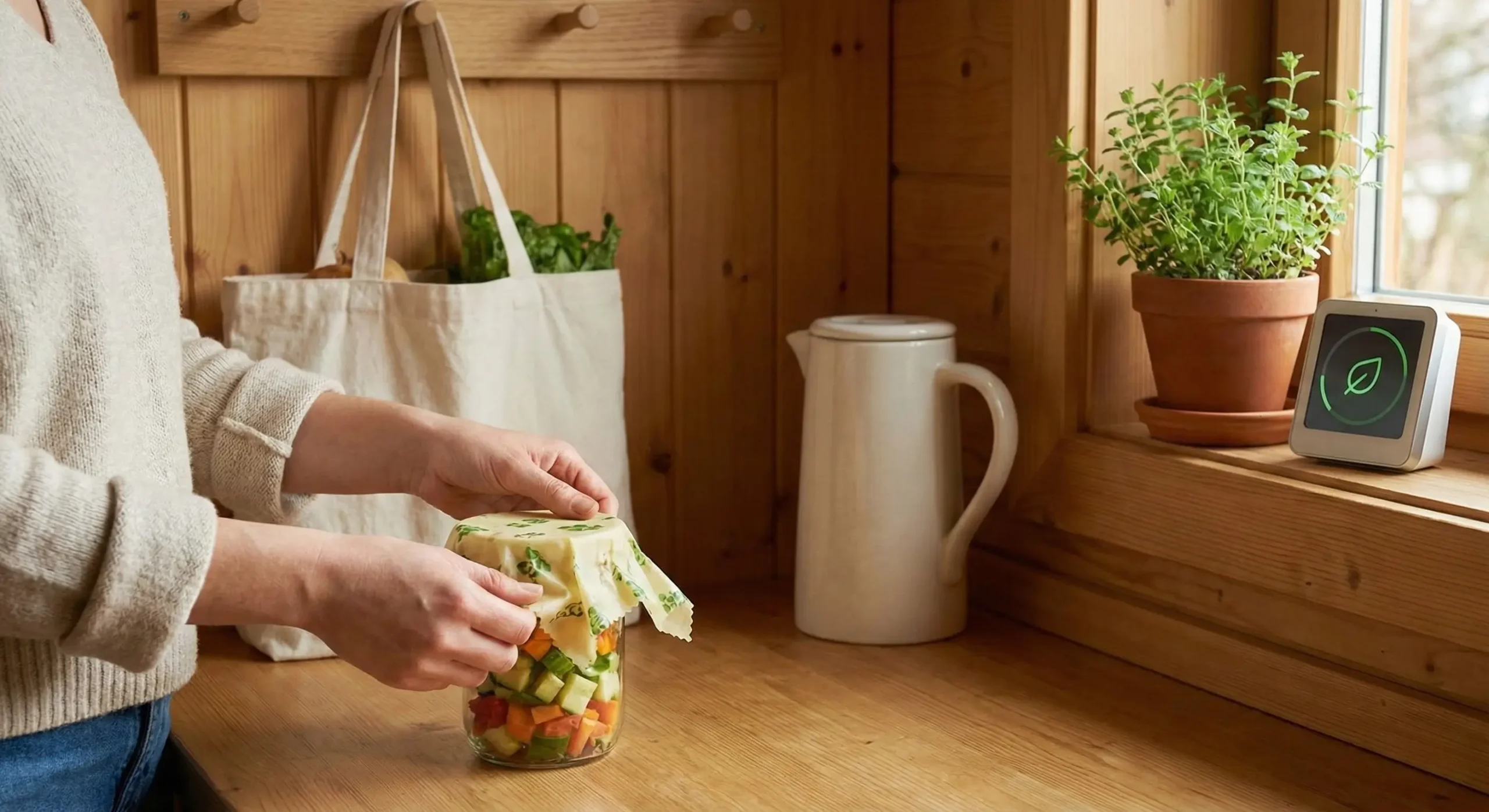
The transition away from plastic does not require a massive investment in aesthetic glass jars. Start by replacing items as they run out. Swap plastic wrap for beeswax wraps or silicone lids. Replace liquid dish soap in plastic bottles with solid dish soap bars or refillable options from local co-ops. These changes are small, but over a year, they prevent dozens of plastic containers from entering the waste stream.
Water Conservation Without Sacrifice
We often take water for granted until the bill arrives or a drought occurs. Fortunately, reducing water usage at home is one of the easiest transitions to make because modern technology does the heavy lifting for you. You do not need to take shorter showers if your showerhead is optimised for efficiency.
Low-Flow Fixtures and Leak Detection
A leaking faucet that drips once per second can waste thousands of gallons of water per year. Regularly checking your fixtures is a fundamental part of a sustainable home. Installing low-flow aerators on your sinks and a high-efficiency showerhead can reduce your indoor water use by half without noticeably changing your experience. It still feels like a full-pressure shower; it just uses significantly less volume.
Graywater and Outdoor Usage
If you have a garden, consider how you might reuse water. Collecting rainwater in a barrel is a classic technique, but even smaller changes matter. If you are waiting for the tap water to get hot, catch that initial cold water in a pitcher and use it to water your indoor plants. It is a zero-cost way to ensure that perfectly clean water doesn’t literally go down the drain.
Common Mistakes in the Transition to Sustainability
Many well-intentioned people quit their sustainable journey because they fall into common traps. Recognising these early on prevents burnout and ensures that your changes are permanent rather than performative.
- The Replacement Trap: Many people think they need to throw away all their plastic containers and buy glass ones immediately. This is counterproductive. The most sustainable item is the one you already own. Use your plastic containers until they are no longer functional before replacing them.
- Wish-cycling: This is the habit of putting non-recyclable items into the recycling bin, hoping they will be recycled. This actually contaminates the entire batch and makes it harder for recycling centres to operate. Learn your local guidelines and, when in doubt, throw it in the trash.
- Ignoring the Invisible: People often focus on physical waste like plastic bottles while ignoring “invisible” waste like digital carbon footprints or vampire energy (electronics that draw power even when turned off).
- Over-complicating Composting: You do not need a high-tech bin or a massive backyard to compost. For many, a simple countertop bin or a local drop-off service is much more sustainable than trying to manage a complex system they don’t have time for.
Actionable Tips for Immediate Impact
If you are looking for a place to start today, this checklist provides the most effective sustainable living simple changes that require minimal effort but offer high rewards.
- Audit Your Lights: Replace any remaining incandescent bulbs with LEDs. They use up to 75 per cent less energy and last 25 times longer.
- Lower the Water Heater: Most water heaters are set to 140 degrees Fahrenheit by default. Lowering it to 120 degrees is safer, prevents mineral buildup, and saves money on every shower.
- Wash Cold: About 90 percent of the energy used by a washing machine goes into heating the water. Modern detergents are designed to work perfectly in cold water, saving energy and preserving your clothes.
- Set Up a “Last Out” Station: Place a small basket by the door for reusable bags, travel mugs, and water bottles. It ensures you never leave the house without the tools you need to avoid single-use items.
- Stop the Junk Mail: Use online services to opt out of physical catalogues and credit card offers. This reduces paper waste at the source before it ever enters your home.
According to the Environmental Protection Agency, the average American produces over four pounds of trash per day. By implementing just two or three of these changes, you can significantly reduce your personal contribution to that statistic while streamlining your daily routines.
Final Thoughts
Sustainable living, simple changes are not about living in the dark or giving up the comforts of modern life. They are about being a smarter consumer and a more efficient steward of your personal space. When you view sustainability through the lens of optimization, it stops being a burden and starts being a lifestyle improvement.
The cumulative effect of thousands of households making these small shifts is far more powerful than a handful of people doing it perfectly. Your home is a micro-ecosystem, and by making it run more efficiently, you are contributing to a larger global movement toward resilience. Start with one change this week—perhaps it is the water heater or the lightbulbs—and notice how it feels to have a home that aligns with your values.
The road to a greener future is paved with small, consistent steps. You do not have to see the whole path to take the first one. Focus on what is manageable, stay curious about new ways to save resources, and remember that every bit of energy saved and every piece of waste avoided is a victory for both your wallet and the world.