
Table of Contents
Search engine optimization often feels like an expensive club where the entry fee is a premium software subscription. However, the secret that many veteran strategists keep close to their chest is that you do not need a massive budget to dominate the search engine results pages. In 2026, the landscape has shifted toward user intent and technical precision, making high-quality free tools more powerful than ever.
Whether you are a solo blogger or a growing business, the right stack of free resources can provide nearly everything you need to outpace your competition. This guide breaks down the essential free SEO tools that actually deliver results without requiring a credit card.
The Foundation of Growth: Google Search Console
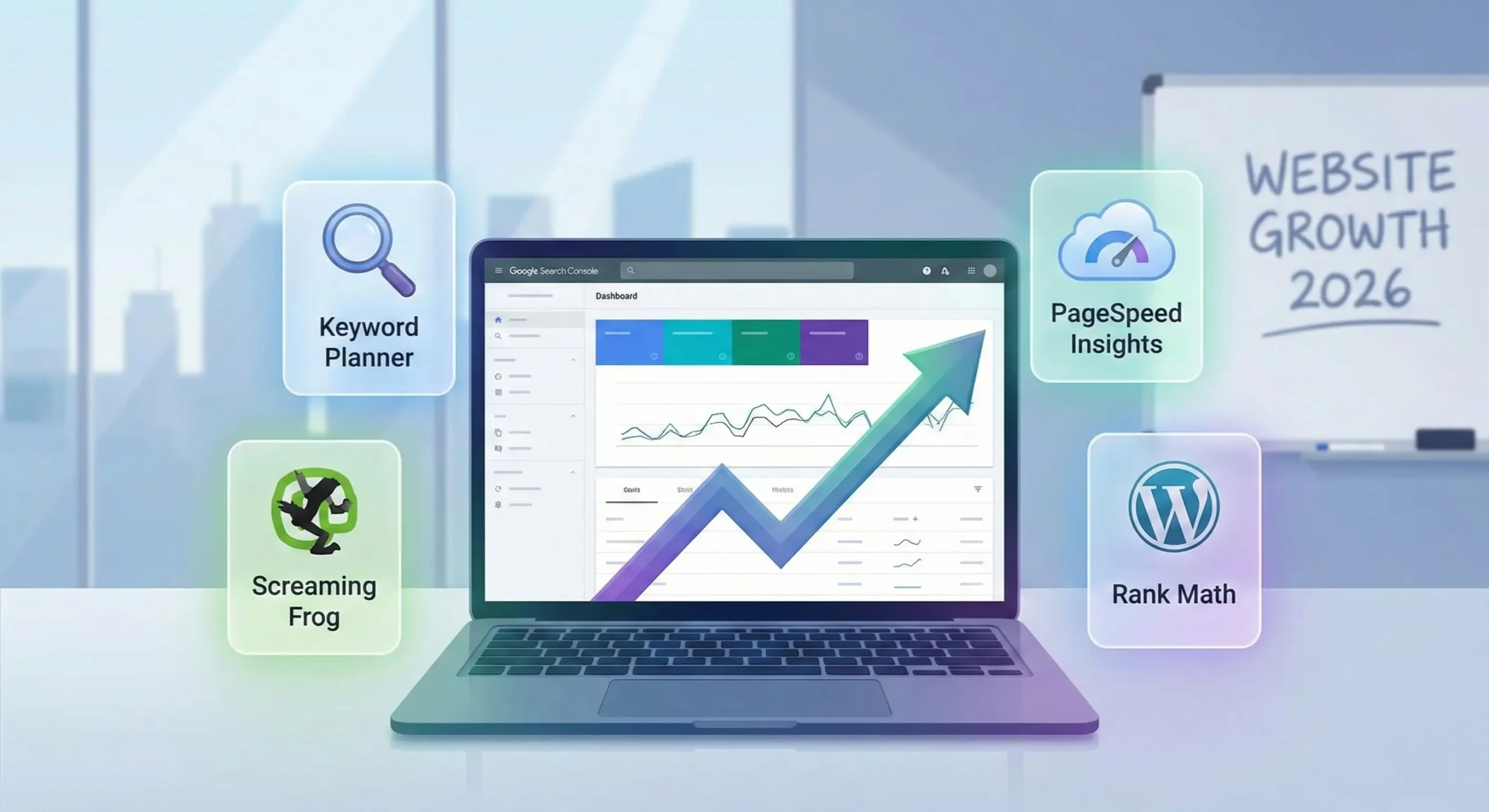
If you are serious about website growth, you must start where the data begins. Many beginners overlook the most powerful tool in the shed because it is free and built-in. Google Search Console is the direct line of communication between your website and the search engine.
In 2026, the data provided here will have become even more granular. It allows you to see exactly which queries are driving traffic, which pages are struggling with indexing, and how Google perceives your site’s mobile usability. It is the only place where you get “ground truth” data directly from the source.
- Performance Reports: Identify “low-hanging fruit” keywords where you rank on page two and need a small boost.
- URL Inspection Tool: Check if a specific page is indexed and see how Googlebot renders your content.
- Core Web Vitals: Monitor the actual user experience metrics that Google uses as a ranking signal.
To get started, simply verify your site at the official Google Search Console portal and submit your XML sitemap. It is a non-negotiable step for anyone looking to scale their organic presence.
Advanced Keyword Research Without the Price Tag
Finding the right keywords is about more than just search volume; it is about understanding the “why” behind a user’s search. While premium tools offer fancy dashboards, several free alternatives provide the same raw insights if you know how to look.
Google Keyword Planner
Originally designed for advertisers, this tool remains a goldmine for SEOs. It provides official search volume ranges and, more importantly, “top of page bid” data. If advertisers are willing to pay for a keyword, that keyword likely has high commercial intent.
AnswerSocrates and AnswerThePublic
Modern SEO is built on answering questions. Tools like AnswerSocrates scrape “People Also Ask” boxes and autocomplete data to show you exactly what questions your audience is asking. This is critical for appearing in featured snippets and Google Discover cards.
Keyword Surfer
This is a free browser extension that displays search volume and related keyword data directly in your Google search results. It is perfect for “on-the-fly” research while you are browsing your competitors’ content or brainstorming new topics.
Technical SEO and Performance Audits
A beautiful website that loads slowly or has broken links will never rank well. Technical SEO is the “engine room” of your site, and keeping it running smoothly is easier than you might think with these free utilities.
Screaming Frog SEO Spider (Free Version)
For websites under 500 pages, the free version of Screaming Frog is an absolute powerhouse. It crawls your site like a search engine bot and highlights 404 errors, duplicate content, and missing meta descriptions. It is a professional-grade tool that fits perfectly into a lean growth strategy.
PageSpeed Insights
Speed is a confirmed ranking factor, especially with the 2026 emphasis on Interaction to Next Paint (INP). PageSpeed Insights tells you exactly what is slowing down your WordPress site, from unoptimized images to heavy JavaScript. It provides a clear checklist of fixes that can improve both your rankings and your conversion rates.
Lighthouse
Built directly into the Chrome browser, Lighthouse allows you to run audits on performance, accessibility, and SEO best practices with a single click. It is an excellent way to do a quick health check on any page before you hit “publish.”
WordPress SEO Plugins: The Ultimate Site Managers
If you are using WordPress, your SEO life is significantly easier. You do not need a developer to manage your metadata or schema markup. A single well-chosen plugin can handle the bulk of your on-page optimization.
- Rank Math: Often considered the most feature-rich free option, it includes built-in schema generators and a highly intuitive interface.
- Yoast SEO: The classic choice for beginners, known for its “traffic light” system that helps you optimise content readability and keyword density.
- AIOSEO: A great all-rounder that excels at local SEO and social media integration.
The key here is not to use all of them at once. Pick one and stick with it. My personal recommendation for 2026 is Rank Math for its lightweight footprint and advanced free features.
Common Mistakes Beginners Make with Free Tools
While these tools are powerful, they are often misused. The most common error is “tool fatigue”—spending so much time looking at data that you forget to actually create content. Another major mistake is chasing “green lights” in plugins at the expense of human readability.
Remember, an SEO plugin is a guide, not a dictator. If a plugin tells you to add your keyword ten more times, but it makes the text sound robotic, ignore the plugin. Google’s algorithms are now sophisticated enough to understand context and synonyms better than most basic plugins.
Additionally, many beginners fail to connect their tools. Data lives in silos unless you integrate them. For example, connecting your WordPress SEO plugin to your Search Console account allows you to see ranking data directly inside your post editor, which is a massive time-saver.
Best Practices for Rapid Website Growth
To see real growth, you need a repeatable workflow. Here is a simple, actionable checklist you can apply to every piece of content you produce:
- Start with Intent: Use Google Trends to see if your topic is rising or falling in popularity.
- Analyse the SERP: Look at the top 3 results for your keyword. What are they doing right? What are they missing?
- Optimise for Discover: Ensure your images are high-resolution (at least 1200px wide) and your headlines are compelling but not clickbait.
- Fix Technical Debt: Run a monthly crawl with Screaming Frog to catch broken links before they accumulate.
- Monitor and Pivot: Use Search Console to find pages that are getting impressions but no clicks. Rewrite their titles and meta descriptions to improve CTR.
Growth is a marathon, not a sprint. Consistency in using these free tools will eventually outweigh a one-time splash with a premium tool.
Final Thoughts
The best free SEO tools are those that you actually use consistently. You do not need a thousand-dollar software suite to build a successful, high-traffic website in 2026. By mastering Google Search Console for data, using Keyword Planner for intent, and keeping your site lean with Screaming Frog, you have a professional-grade arsenal at your fingertips.
Focus on providing genuine value to your readers and use these tools to ensure that value is easy for search engines to find. The traffic will follow. Start by setting up your Search Console today—it is the single best move you can make for your site’s future.