
Table of Contents
The economic landscape of 2026 feels a bit like a high-stakes game of musical chairs. Just as we settle into a rhythm of growth, the music stops, the interest rates shift, and the global trade winds change direction. If you feel like the traditional “set it and forget it” advice of the last decade isn’t quite cutting it anymore, you are not alone.
Volatility has become the new baseline. Between the rapid integration of generative AI into every sector and the lingering effects of global fiscal shifts, the markets are behaving in ways that would make a 1990s fund manager break out in a cold sweat. However, uncertainty does not have to mean stagnation. For the disciplined investor, these shifts create unique entry points that simply did not exist during the era of “easy money.”
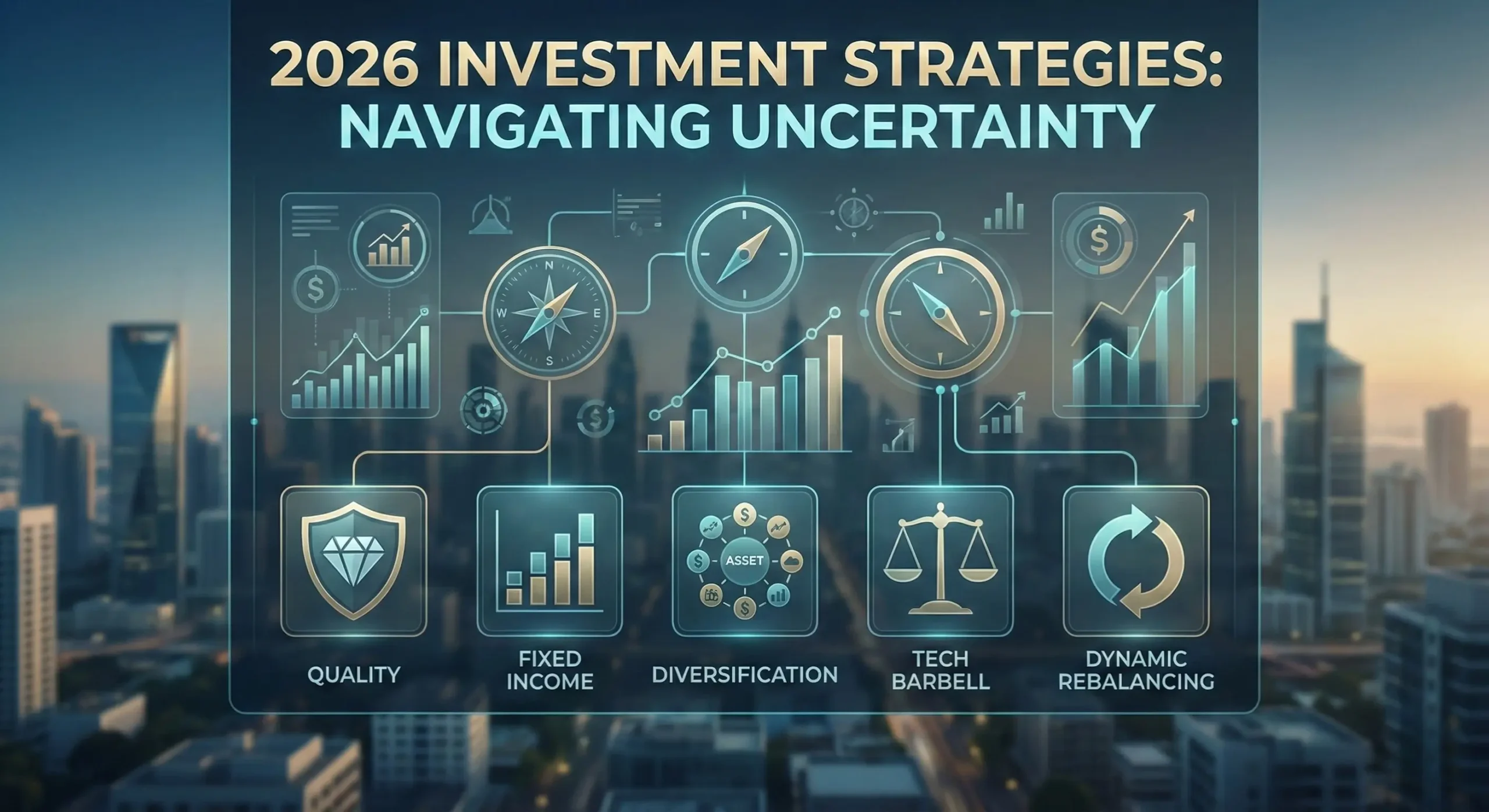
In this guide, we will explore five sophisticated yet accessible investment strategies designed to keep your capital safe and your returns consistent, regardless of which way the economic pendulum swings this year. We are moving beyond basic advice and looking at how to build a resilient, future-proof portfolio.
1. Prioritising Quality Over Speculation
In a booming market, even mediocre companies can see their stock prices soar. In 2026, that grace period has officially ended. The “Quality Factor” is now the primary driver of sustainable returns. This strategy involves focusing on companies with “fortress balance sheets”—low debt, high cash flow, and an undeniable competitive moat.
The Return of Fundamental Analysis
For several years, investors chased growth at any cost. Today, the market is punishing companies that cannot show a clear path to profitability. When evaluating your holdings, look for a high Return on Equity (ROE) and consistent dividend growth. These are not just “boring” stocks; they are the anchors that prevent your portfolio from drifting away during a market storm.
Why Cash Flow is King
In an uncertain economy, cash is more than just liquidity; it is an insurance policy. Companies that generate significant free cash flow can self-fund their growth without relying on expensive bank loans. They are also the most likely to buy back shares or increase dividends when the rest of the market is struggling. This creates a natural floor for the stock price.
2. Embracing the New Era of Fixed Income
For nearly fifteen years, bonds were the ignored stepchild of the investment world because yields were effectively zero. That has changed. In 2026, fixed income has reclaimed its seat at the table, offering a genuine alternative to the volatility of the equity markets.
Laddering Your Way to Stability
One of the most effective investment strategies right now is bond laddering. By purchasing fixed-income securities that mature at different intervals (e.g., one, three, five, and ten years), you ensure a steady stream of liquid cash. If interest rates rise, you can reinvest the maturing principal at the new, higher rates. If rates fall, you have already locked in higher yields for the long term.
Exploring Inflation-Protected Securities
Inflation remains a persistent shadow over the 2026 economy. Standard bonds can lose real value if inflation outpaces their yield. Including Treasury Inflation-Protected Securities (TIPS) or similar global instruments ensures that your purchasing power remains intact. These assets act as a hedge, adjusting their principal value based on the Consumer Price Index.
3. Strategic Diversification Beyond the Standard 60/40
The classic 60% stocks and 40% bonds portfolio served investors well for decades, but it is currently facing a “correlation crisis.” Lately, when stocks go down, bonds have often followed. To combat this, smart investors are looking toward non-correlated assets that do not move in lockstep with the S&P 500.
The Role of Commodities and Real Assets
Real estate, gold, and industrial metals often thrive when financial assets are struggling. In 2026, we are seeing a “super-cycle” in certain commodities driven by the global transition to green energy. Assets like copper and lithium are no longer just speculative plays; they are essential components of the global infrastructure. Small allocations to these areas can provide a necessary buffer.
Private Equity and Alternative Lending
For those with a longer time horizon, private markets offer a way to escape the daily emotional rollercoaster of the stock exchange. While less liquid, private equity and private debt often offer higher yields and lower volatility because they are not subject to the same “panic selling” triggers as public markets. It is a way to trade liquidity for stability.
4. The “Barbell” Approach to Technology
Technology continues to be the greatest wealth creator of our time, but the risks are higher than ever. The barbell strategy involves splitting your tech exposure into two extremes: the “Steady Giants” and the “Pure Innovators,” while avoiding the expensive, mediocre middle ground.
The Infrastructure Layer
On one side of the barbell, you have the companies that provide the “picks and shovels” for the digital age. This includes semiconductor manufacturers and data centre REITs. Regardless of which AI startup wins the race, they will all need chips and server space. This is a lower-risk way to play the massive technological shifts occurring in 2026.
The Moonshot Allocation
On the other side of the barbell, a very small percentage of the portfolio (perhaps 3-5%) is dedicated to high-upside, transformative technologies like quantum computing or biotech breakthroughs. By keeping this allocation small, you protect your downside while ensuring you don’t miss out on the next “Amazon-scale” growth story.
5. Dynamic Rebalancing and Tax-Loss Harvesting
In a stable market, rebalancing your portfolio once a year is usually sufficient. In the 2026 economy, a more dynamic approach is required. This doesn’t mean day trading, but it does mean being more intentional about where your gains are coming from and where your losses can work for you.
The Math of Rebalancing
When one asset class outperforms significantly, it takes up a larger percentage of your portfolio, inadvertently increasing your risk. By selling a portion of your “winners” and buying “losers” (assets that are currently undervalued), you are forced to follow the golden rule of investing: buy low and sell high. It feels counterintuitive to sell what is working, but it is the only way to maintain your desired risk profile.
Turning Losses into Opportunities
Tax-loss harvesting is an essential tool in an uncertain year. According to the latest World Economic Outlook, global fiscal policies are becoming more stringent. By selling assets that are currently at a loss, you can offset the capital gains taxes from your winners. This effectively keeps more of your money working for you rather than handing it over to the tax authorities. It is one of the few “guaranteed” returns available to investors.
Common Mistakes or Challenges in 2026
Even the most seasoned investors can fall into traps when the headlines are scary. The biggest challenge in 2026 is the “Noise-to-Signal” ratio. With social media and 24-hour news cycles, every minor market dip is treated like a global catastrophe.
- Emotional Reactivity: Selling at the bottom of a cycle because of a scary headline is the fastest way to permanent capital loss.
- Over-Hedging: It is possible to be too safe. If you put all your money in “safe” cash, you will likely lose to inflation over time. Balance is mandatory.
- Ignoring Fees: In a lower-return environment, a 1% or 2% management fee can eat up a massive portion of your total gains. High-cost mutual funds are often the “silent killers” of wealth.
- Chasing Trends: Just because everyone is talking about a new “digital collectable” or “meme coin” doesn’t make it a strategy. If you can’t explain how the asset generates value, it is a gamble, not an investment.
Best Practices for a Resilient Portfolio
If you want to move from “surviving” to “thriving” in the current economy, consider this checklist your operational manual. These are the actionable steps that separate the amateurs from the professionals.
- Audit Your Risk Tolerance: Be honest with yourself. If a 10% drop in your portfolio keeps you awake at night, your current allocation is too aggressive for your personality.
- Automate Your Contributions: Use dollar-cost averaging to buy into the market every month, regardless of the price. This removes the “timing the market” stress.
- Maintain an Emergency Fund: Ensure you have 6-12 months of living expenses in a high-yield savings account. This prevents you from being forced to sell your investments during a market downturn.
- Review Your Diversification: Check if you are “over-concentrated” in one sector. If 50% of your wealth is in tech stocks, you aren’t diversified; you’re just betting on one industry.
- Stay Curious, But Sceptical: Read widely, but always look for the data behind the claims. Successful investing in 2026 requires a healthy dose of critical thinking.
Final Thoughts
The 2026 economy is certainly not for the faint of heart, but it is also not a reason for despair. History has shown that the greatest periods of wealth creation often begin during times of profound uncertainty and structural change. By focusing on quality, embracing the new reality of fixed income, and staying disciplined with your rebalancing, you can navigate these waters with confidence.
The goal of these investment strategies is not to predict the future—no one can do that—but to build a portfolio that is prepared for multiple futures. Whether the economy experiences a “soft landing” or a period of extended turbulence, the principles of value, diversification, and risk management remain your most reliable allies.
As you move forward, remember that the most valuable asset you own isn’t in your brokerage account—it is your ability to remain calm and rational when others are reacting out of fear. Take the long view, stick to your plan, and let the compounding power of the market do the heavy lifting for you.
For more insights on managing your finances, you might want to read our guide on how to build a recession-proof budget or check out our deep dive into the future of decentralised finance.