Table of Contents
The debate between the chaotic charm of a roadside stall and the comforting, predictable warmth of a home-cooked meal is as old as the Indian spice trade itself. Every Indian food enthusiast has stood at this crossroad, usually with a plate of spicy pani puri in one hand and the memory of their mother’s cooling dal-chawal in the mind.
Choosing between Indian street food vs home food is not just about calories or cost; it is about choosing between an adrenaline rush and a long-term investment in well-being. While one offers instant gratification through bold flavours, the other provides the foundational nutrition that sustains generations.
In this comprehensive guide, we will analyse the structural differences, the nutritional trade-offs, and the psychological impact of these two pillars of Indian cuisine. Whether you are a fitness enthusiast or a culinary explorer, understanding these nuances will change how you view your next meal.
The Cultural Power of the Indian Palate
India is a country where food is the primary language of love and hospitality. To understand the rivalry between street stalls and home kitchens, we must first acknowledge that both serve distinct purposes in the social fabric. One provides a quick, affordable escape from the mundane, while the other serves as the ultimate sanctuary.
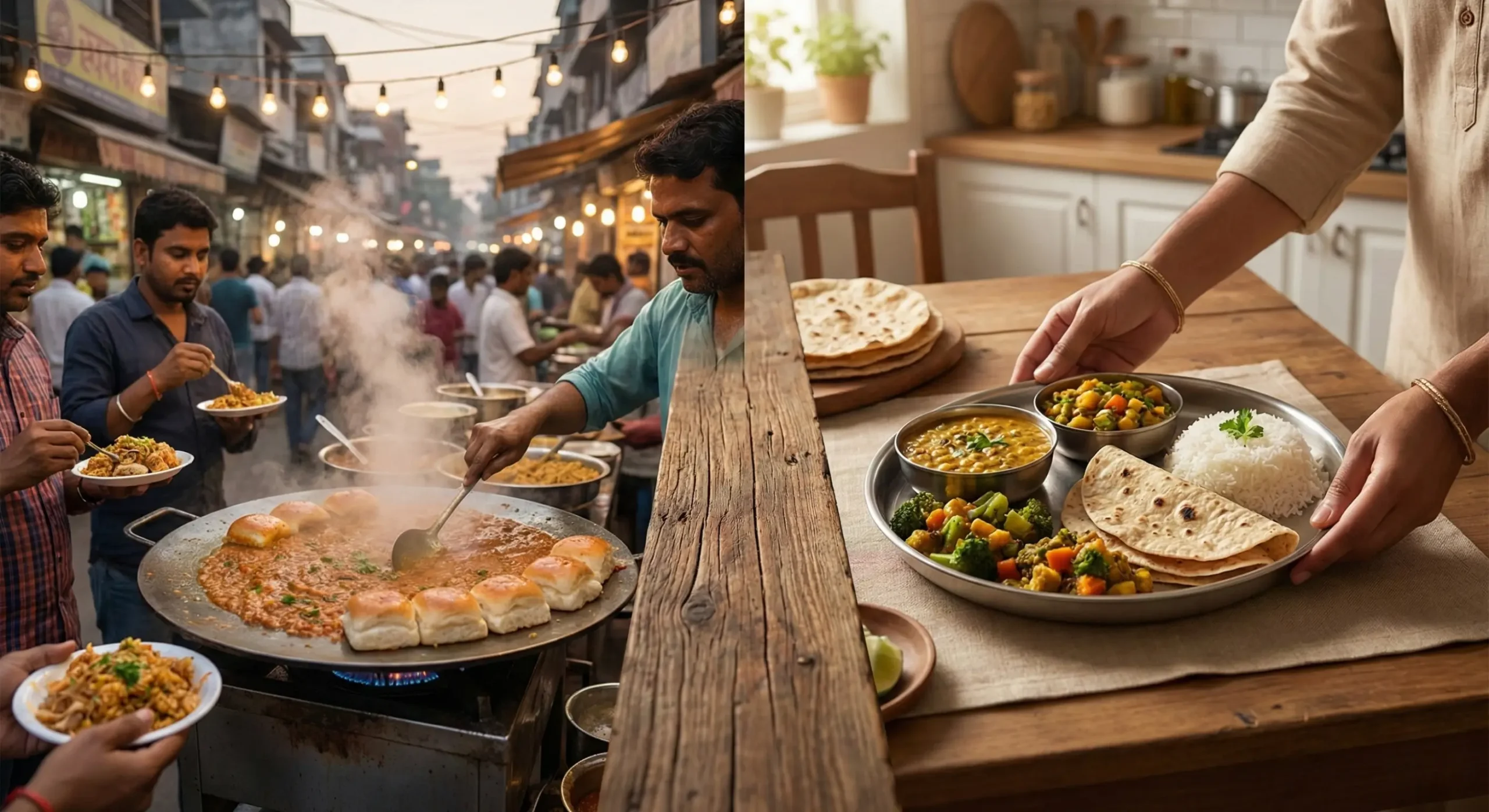
Street food in India is a masterclass in efficiency and sensory engineering. Vendors often spend decades perfecting a single dish, leading to a level of specialisation that home kitchens rarely achieve. Conversely, home food is built on the principles of balance and seasonal availability, ensuring that the body receives what it needs based on the climate.
The Anatomy of Flavour in Street Food
The primary reason street food tastes so distinct is the use of high-heat cooking and concentrated spice blends. When you eat at a stall, you are often consuming flavours that have been intensified through reduction or deep-frying. The focus is on the “hit”—that immediate explosion of salt, acid, and heat that triggers a dopamine release.
Subtle nuances are often sacrificed for bold strokes. A samosa from a street vendor is designed to be crunchy even after thirty minutes, a feat achieved through specific ratios of fats that home cooks might hesitate to use. This intensity is what makes street food addictive and hard to replicate in a domestic setting.
The Philosophy of the Indian Home Kitchen
Home-cooked meals follow the Ayurvedic principle of “Sattvic” or “Rajasic” balances, even if the cook is unaware of the formal terms. The goal of a home meal is sustained energy. The use of oils is controlled, the vegetables are washed multiple times, and the spices are added to aid digestion rather than just to provide a kick.
In a home environment, the cook has the luxury of time. Lentils are soaked to remove anti-nutrients, and rotis are made fresh to ensure they are soft without the need for excessive additives. This mindful preparation is the biggest differentiator when comparing Indian street food vs home food.
The Nutritional Tug-of-War
When we look at the numbers, the gap between the two becomes even wider. Street food is notoriously high in simple carbohydrates and trans fats. While delicious, these components contribute to rapid spikes in blood sugar and long-term inflammatory responses if consumed regularly.
Home food, on the other hand, prioritizes fiber and protein. A standard Indian thali at home usually includes a fermented item, a leafy green, a protein source like dal or curd, and a complex carbohydrate. This diversity ensures a wide spectrum of micronutrients that street food often lacks due to its focus on single-dish servings.
- Caloric Density: Street food is often calorie-dense but nutrient-poor. A single plate of chole bhature can exceed 1,000 calories.
- Sodium Content: Vendors use high amounts of salt and chaat masala to preserve food and enhance taste, often exceeding daily recommended limits in one sitting.
- Oil Quality: Street vendors may reuse cooking oil multiple times, which leads to the formation of harmful compounds. Home cooks typically use fresh oil or healthier alternatives like ghee.
Hygiene and Food Safety: The Elephant in the Room
The most significant concern for any consumer in the Indian street food vs home food debate is hygiene. While many vendors are becoming more conscious, the environmental factors of street-side cooking—dust, heat, and water quality—pose inherent risks.
Home food provides a controlled environment. You know the source of your water, the freshness of your produce, and the cleanliness of the utensils. For those with sensitive digestive systems, the choice is almost always tipped in favour of home-cooked meals.
However, it is important to note that the regulatory landscape is changing. Organisations like the Food Safety and Standards Authority of India (FSSAI) are working to train street vendors on better handling practices, though the gap remains significant compared to the safety of a domestic kitchen.
Common Challenges When Choosing Between the Two
Many people struggle to maintain a healthy diet because they view the choice as binary. They either eat strictly at home and feel deprived, or they binge on street food and suffer the health consequences. This “all or nothing” mentality is the biggest mistake beginners make.
Another challenge is the “Hidden Ingredient” factor. Many people believe that eating a salad from a street vendor is healthy, but they overlook the contaminated water used to wash the greens or the unpasteurized cream used in the dressing. Understanding the invisible risks is key to making an informed choice.
Why We Crave Street Food Over Home Food
It is not just about the taste; it is about the experience. The sounds of the ladle hitting the iron tawa, the aroma of tempering spices wafting through the air, and the social aspect of standing with friends all contribute to the appeal. Home food can sometimes feel repetitive, leading to “palate fatigue.” This is why even those with the best home cooks occasionally seek the thrill of the street.
Best Practices for Balancing Both Worlds
You do not have to give up one for the other. The goal is to integrate the best of both worlds while minimising risk. Here is how a senior strategist looks at managing this balance:
- The 80/20 Rule: Aim for 80% home-cooked meals and 20% street or outside food. This maintains metabolic health while satisfying cravings.
- Choose Cooked over Raw: When eating street food, opt for items that are fried or boiled in front of you (like hot jalebis or steamed momos) rather than raw chutneys or pre-cut fruits.
- Audit the Vendor: Look for high-turnover stalls. A busy vendor usually has fresher ingredients because their stock clears out daily.
- Replicate at Home: Use high-quality spices and air-frying techniques to recreate street food favourites at home. This gives you the flavour profile without the digestive distress.
- Internal Link Suggestion: Guide to making healthy Indian snacks at home.
Checklist for Safe Street Food Consumption
- Is the vendor wearing gloves or using clean tongs?
- Is the cooking area away from open drains or heavy traffic dust?
- Does the oil look dark and viscous (a sign of over-reusing)?
- Are the serving plates disposable or properly washed in clean water?
The Economic and Social Impact
Beyond health, there is an economic dimension. Street food is the backbone of the micro-economy in India. Millions of families depend on these small stalls. By choosing reputable street vendors, you are supporting local entrepreneurship and keeping culinary traditions alive.
Home cooking, however, is a vital life skill that fosters independence and family bonding. The act of sharing a meal made from scratch is a cornerstone of Indian culture that street food can supplement but never replace.
Final Thoughts: Which Is Truly Better?
If we look at the data, home food is the clear winner for longevity, health, and financial stability. It offers a level of customisation and safety that no commercial outlet can match. However, “better” is a subjective term. If you are looking for a memory, a quick pick-me-up, or a taste of a city’s soul, street food is irreplaceable.
The smartest action you can take is to treat street food as a celebration and home food as your fuel. Respect the art of the street vendor, but cherish the science of the home kitchen. By mastering this balance, you get to enjoy the best of India’s vibrant food culture without compromising your health.
Ultimately, the “better” choice is the one that leaves you feeling satisfied today and healthy tomorrow. Start by evaluating your weekly meal plan—can you swap one street meal for a high-quality home-cooked version of the same dish? Your body will thank you.