
Table of Contents
The modern kitchen is often a site of high intentions and low-level tragedies. We visit the grocery store with visions of vibrant salads and nutritious stir-fries, only to find a week later that the spinach has turned into a questionable green liquid and the bread has developed its own ecosystem. This cycle of waste is not just an environmental concern; it is a direct drain on your household budget and your personal time.
Mastering food storage to avoid waste is an essential skill that bridges the gap between culinary enthusiasm and practical domestic management. It requires a blend of scientific understanding, organizational discipline, and a slight shift in daily habits. When we treat our ingredients with the respect their chemistry demands, we significantly extend their lifespan and ensure that our hard-earned money does not end up in the compost bin.
In this guide, we will explore the professional strategies used by food managers and seasoned home cooks to keep ingredients at their peak. From understanding the atmospheric needs of a head of lettuce to the strategic layout of a standard refrigerator, you will learn how to transform your kitchen into a high-efficiency storage hub.
The Science of Freshness and Why It Matters
Food degradation is an inevitable biological process, but it is one that we can slow down through environmental control. The primary enemies of freshness are oxygen, moisture, light, and temperature fluctuations. Each food group reacts differently to these elements, which is why a one-size-fits-all approach to storage inevitably leads to premature spoilage.
Ethylene gas is perhaps the most overlooked factor in the kitchen. Many fruits, such as bananas, apples, and tomatoes, release this gas as they ripen. Other produce, like broccoli, carrots, and leafy greens, are extremely sensitive to it. If you store these two groups together, the gas-emitters will essentially force the sensitive items into an early retirement. Understanding these biological interactions is the first step toward a zero-waste kitchen.
The Role of Humidity in Preservation
Most modern refrigerators come equipped with crisper drawers, yet few people utilize them correctly. These drawers are designed to manage humidity levels. A high-humidity setting closes the vents, trapping moisture inside, which is ideal for wilting-prone items like thin-skinned vegetables and herbs. A low-humidity setting opens the vents, allowing gases to escape, which is perfect for fruits that rot easily.
By categorizing your produce based on their humidity needs, you can easily double the shelf life of your weekly groceries. It is a simple adjustment that requires no extra equipment, only the knowledge of which lever to slide on your refrigerator drawer.
Strategic Refrigerator Management
A refrigerator is not just a cold box; it is a complex appliance with distinct temperature zones. Professional kitchens follow a strict hierarchy of storage based on the temperature requirements of different foods, and applying this logic at home can prevent both spoilage and foodborne illnesses. The goal is to place the most sensitive items in the most stable environments.
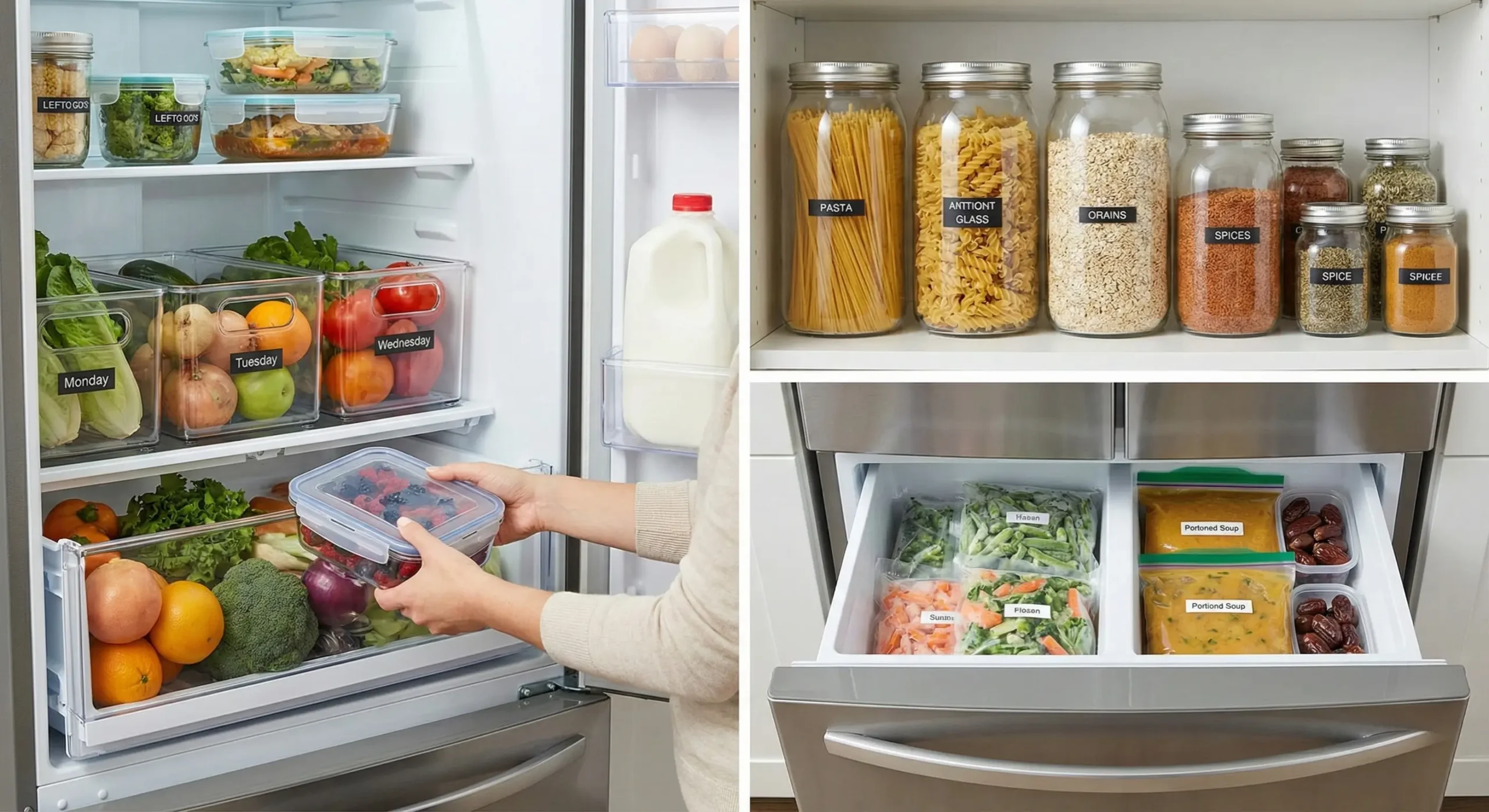
- The Top Shelves: This area has the most consistent temperature. It is the ideal spot for “ready-to-eat” foods, leftovers, drinks, and deli meats that do not require high-heat cooking.
- The Bottom Shelves: This is the coldest part of the main fridge body. Store raw meat, poultry, and fish here. Placing these items on the bottom also prevents any accidental drips from contaminating other foods.
- The Door: This is the warmest part of the refrigerator because it is exposed to room air every time you open it. Contrary to popular habit, this is the worst place to store milk or eggs. Use the door for condiments, preserves, and juices.
Optimizing the Crisper Drawers
As mentioned, the crisper drawers are your best defense against wilting. To maximize their effectiveness, avoid overcrowding. Air circulation is vital for maintaining a consistent temperature. If you pack a drawer too tightly, you create “hot spots” where bacteria and mold can thrive. A good rule of thumb is to keep drawers at about two-thirds capacity.
For leafy greens, a common trick is to wrap them loosely in a dry paper towel before placing them in a reusable silicone bag. The towel absorbs excess moisture that leads to slime, while the bag prevents the leaves from drying out completely. This balance of moisture is the secret to keeping greens crisp for up to two weeks.
The Art of Pantry Organization
While the refrigerator handles the perishables, the pantry is where the bulk of your long-term investments live. Proper pantry storage is about more than just aesthetics; it is about protecting dry goods from their primary threats: heat, light, and pests. The “out of sight, out of mind” philosophy often leads to forgotten cans of beans and expired flour, contributing heavily to household waste.
Decanting dry goods into clear, airtight containers is one of the most effective ways to manage your inventory. It allows you to see exactly how much of an ingredient you have left and protects items like flour, sugar, and grains from moisture and pantry moths. For further guidance on food safety standards, referring to the USDA Food Safety and Inspection Service can provide specific storage timelines for various shelf-stable items.
Managing Grains and Spices
Whole grains and nuts contain natural oils that can turn rancid if exposed to heat or light for too long. If you do not plan on using these items within a month, consider storing them in the refrigerator or freezer. This is particularly important for brown rice, walnuts, and whole-wheat flour, which have a shorter shelf life than their processed counterparts.
Spices should also be kept away from the stove. While it is convenient to have your seasonings right next to the heat source, the constant temperature fluctuations and steam can dull the flavors and cause clumping. A cool, dark cupboard is the best environment for maintaining the potency of your spice collection.
Freezer Strategies for Long-Term Success
The freezer is essentially a “pause button” for your food, but it is often used as a graveyard for leftovers. To make the most of your freezer, you must prevent freezer burn, which occurs when air reaches the food’s surface and dehydrates it. This doesn’t make the food unsafe, but it does make it unpalatable.
- Use Airtight Packaging: Squeeze as much air as possible out of freezer bags or use vacuum sealers for long-term storage.
- Label Everything: It is a scientific fact that all frozen blocks of soup look identical after three weeks. Label each item with the name and the date it was frozen.
- Freeze in Portions: Do not freeze a massive pot of chili in one container unless you plan to eat it all at once. Small portions thaw faster and reduce the likelihood of wasting leftovers.
The Blanching Secret
If you are freezing fresh vegetables, blanching is a non-negotiable step. Briefly boiling the vegetables and then plunging them into ice water stops the enzymatic actions that cause loss of flavor, color, and texture. Without blanching, frozen vegetables often become tough or bitter when eventually cooked.
Common Mistakes in Food Storage
Even well-intentioned cooks fall into common traps that accelerate food spoilage. Identifying these habits is half the battle in the quest for a waste-free kitchen. One of the most frequent errors is washing produce immediately after coming home from the store. While it feels productive, the added moisture encourages mold growth. It is much better to wash fruits and vegetables just before you use them.
Another mistake is the improper storage of bread. Many people put bread in the refrigerator to prevent mold, but the cold temperature actually causes the starch to crystallize, making the bread go stale much faster. Bread should be kept in a cool, dry place in a bread box or paper bag, or frozen for long-term use.
Finally, we must address the “hot food in the fridge” myth. Placing a large pot of boiling soup directly into the refrigerator can raise the internal temperature of the entire unit, putting other perishable items like milk and meat at risk. Allow food to cool to room temperature (for no more than two hours) before refrigerating, or use an ice bath to cool it quickly.
Actionable Tips for Immediate Results
Reducing food waste does not require a complete lifestyle overhaul. Implementing a few tactical changes can yield significant results within just one week. The following checklist provides a framework for better kitchen management.
- The First-In, First-Out (FIFO) Method: When putting away new groceries, move the older items to the front of the shelf. This ensures you use the items closest to their expiration date first.
- The “Eat Me First” Bin: Designate a small container in the fridge for items that are nearing their end. When you are looking for a snack or a quick meal component, check this bin first.
- Weekly Fridge Audit: Before you go grocery shopping, take five minutes to see what is already in your fridge. This prevents “double-buying” and helps you plan meals around what needs to be used.
- Regrowing from Scraps: Some vegetables, like green onions and celery, can be placed in a small jar of water to regrow. It is a simple way to get a second life out of your kitchen scraps.
Using Technology and Documentation
If you find yourself constantly forgetting what is in your freezer, consider keeping a simple digital list on your phone. Updating a “Freezer Inventory” takes seconds but saves you from buying a third bag of frozen peas. Similarly, understanding the difference between “Use By” and “Best Before” dates is crucial. “Best Before” is often a suggestion of quality, not a hard deadline for safety.
Conclusion
Effective food storage to avoid waste is a combination of logic and discipline. It is about understanding that a refrigerator is a tool, not just a storage closet, and that every ingredient has its own set of environmental preferences. When we take the time to store our food properly, we are not just being “tidy”—we are practicing a form of household sustainability that pays dividends in both flavor and finances.
By implementing the strategies discussed, you can significantly reduce the amount of food that leaves your house in a trash bag. Start small: reorganize your fridge shelves today, or move your bread out of the refrigerator. These tiny adjustments create a more efficient kitchen environment where ingredients stay fresh, meals are easier to prepare, and the tragic demise of a bag of spinach becomes a thing of the past.