Table of Contents
In 2026, the emphasis has moved from simple novelty to meaningful utility as technology advances more quickly than ever before. We now need tools that save us time, clear our minds, and enhance our wellbeing, not just gadgets that look good. The right gadgets can function as a personal assistant that never sleeps, whether you are trying to stay on top of your fitness goals, running a busy household, or working from home.
Purchasing every new product on the market is not the best way to select the best devices. It involves pinpointing the precise problems with your everyday activities and coming up with a clever way to fix them. The current state of consumer electronics is made to make your life easier, from wearable health monitors that anticipate fatigue before you feel it to AI-driven home hubs.
In this guide, we will explore the top gadgets that are defining modern living this year. These recommendations focus on reliability, ease of use, and genuine value. By the end of this post, you will have a clear idea of which upgrades are worth your investment and how to integrate them into your lifestyle without feeling overwhelmed.
Smart Home Hubs and Personal Assistants
The heart of any modern home is the central hub. In 2026, these devices have evolved from simple voice-controlled speakers into proactive management systems. Instead of just waiting for you to ask a question, these assistants now use localized AI to anticipate your needs based on your habits and the time of day.
AI Driven Home Management Centers
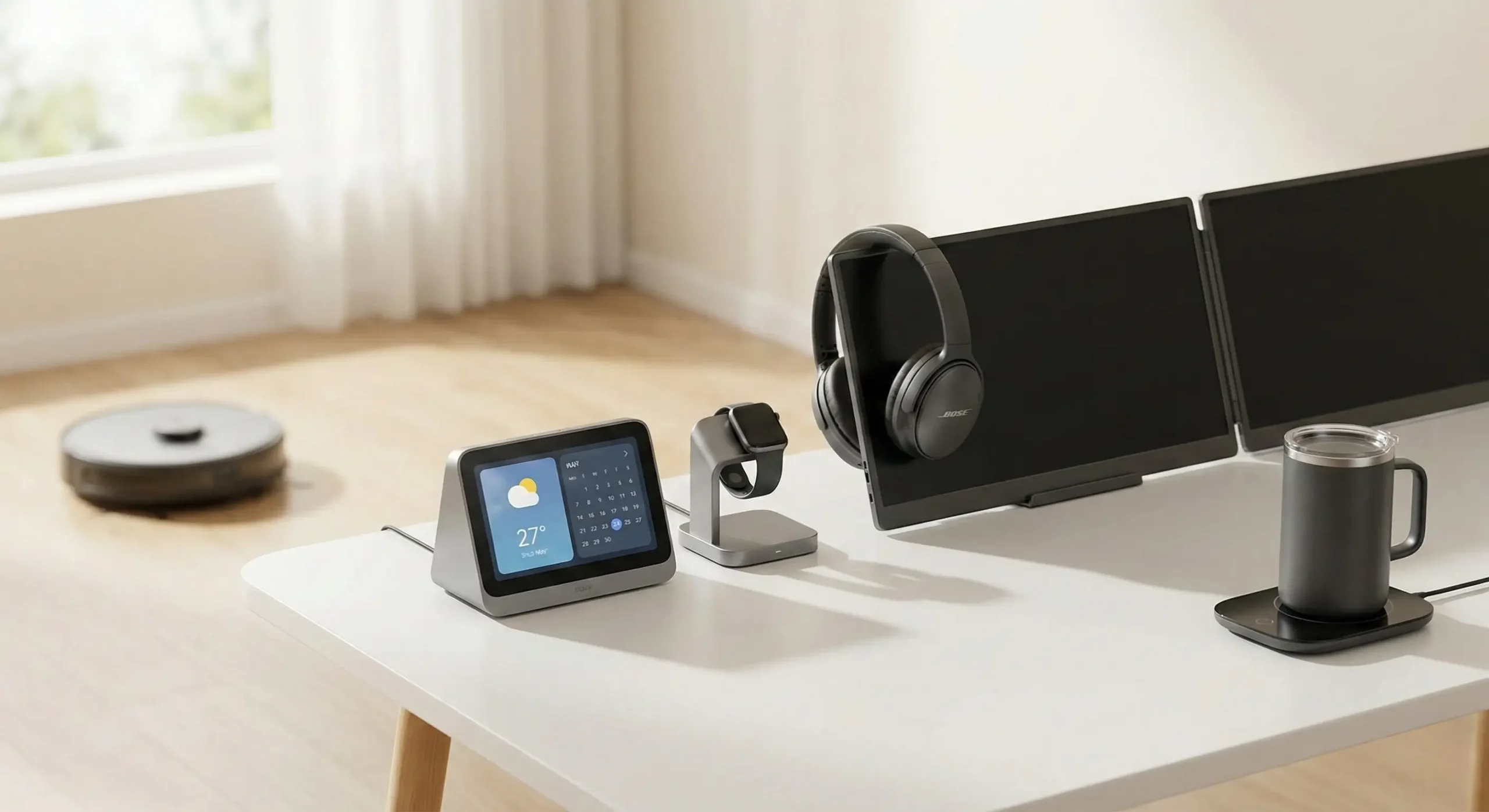
A dedicated home management center acts as the brain of your living space. These devices typically feature a high-resolution touchscreen and integrated sensors that monitor everything from indoor air quality to security. The latest models are designed to be privacy-first, processing your voice commands locally rather than in the cloud.
For example, a smart hub can now recognize when you are entering the kitchen in the morning and automatically start the coffee maker while displaying your calendar for the day. It removes the friction of manual scheduling, allowing you to focus on your morning routine instead of managing your appliances.
Advanced Voice Assistants with Natural Processing
Voice assistants have become significantly more human-like in their interactions. They no longer require rigid commands to understand what you want. You can speak to them naturally, asking follow-up questions or giving complex instructions like “dim the lights and play my evening focus playlist in the study.”
These assistants are also becoming more integrated with other household services. They can track your grocery levels, suggest recipes based on what is in your fridge, and even schedule maintenance for your HVAC system when they detect a drop in efficiency. This level of automation turns a house into a truly responsive environment.
Internal Link Suggestion: [beginner guide to smart home automation]
Wearable Technology for Health and Performance
Wearables have moved beyond the basic step counter. Today, they are sophisticated diagnostic tools that provide a deep dive into your physiological state. The goal of modern wearable tech is to provide actionable data that helps you make better decisions about your rest, movement, and stress management.
Smart Rings for Discreet Health Monitoring
Smart rings have surged in popularity because they offer high-level data without the bulk or distraction of a traditional smartwatch. These rings use advanced PPG sensors to track heart rate variability, sleep stages, and even blood oxygen levels with high accuracy.
Because they are worn 24/7, they provide a much more consistent baseline for your health. Many users prefer them because they do not have a screen, which helps reduce digital eye strain and prevents the urge to check notifications constantly. It is a perfect example of technology that works quietly in the background to improve your life.
High Performance Smartwatches for Productivity
For those who need to stay connected, the latest smartwatches have become standalone communication devices. With built-in cellular connectivity and improved battery life, these watches can often replace your phone for short trips or workouts.
Beyond fitness, these watches are now productivity powerhouses. They can record voice memos, provide turn-by-turn navigation through haptic feedback, and even act as a digital key for your home and car. By moving these essential tasks to your wrist, you can keep your phone in your pocket and stay more present in your physical environment.
Smart Kitchen Gadgets for Healthy Living
The kitchen is often the busiest room in the house, and it is where smart technology can save the most time. Modern kitchen gadgets are focused on precision and health, helping you prepare nutritious meals with minimal effort.
Intelligent Convection Ovens and Air Fryers
The new generation of smart ovens uses internal cameras and sensors to identify the food you place inside. Once identified, the oven automatically selects the optimal temperature and cooking time. This eliminates the guesswork and ensures that your meals are cooked perfectly every time.
Many of these appliances also sync with health apps on your phone. If your wearable device suggests you need more protein or fewer calories, your smart oven can recommend specific cooking methods to help you meet those dietary goals. It is a holistic approach to wellness that starts with what you eat.
Automated Water Purification Systems
Clean water is essential, but maintaining a filtration system can be a chore. The latest smart water purifiers monitor their own filter health and water quality in real-time. They can alert you through an app when a filter needs replacing or when they detect a change in the mineral content of your tap water.
Some models even feature adaptive purification, which adjusts the intensity of the filtration based on the source of the water. This ensures you are always getting the safest drinking water while extending the life of the internal components.
Internal Link Suggestion: [essential smart kitchen appliances for busy professionals]
Productivity Tools for the Modern Workspace
With the rise of hybrid and remote work, our home offices have become permanent fixtures. To stay competitive and focused, professionals are turning to gadgets that enhance concentration and streamline digital tasks.
Ultra Portable Dual Screen Monitors
Multitasking on a single laptop screen can be frustrating. Portable dual-screen monitors allow you to expand your workspace wherever you go. These thin, lightweight displays connect via a single cable and provide the screen real estate of a full desktop setup.
This is particularly useful for researchers, writers, and developers who need to reference multiple documents at once. Being able to take a multi-screen setup to a cafe or a co-working space ensures that your productivity does not drop just because you are away from your desk.
AI Integrated Noise Canceling Headphones
Noise cancellation has reached a new peak with AI integration. Modern headphones can now distinguish between annoying background noise, like a vacuum or traffic, and important sounds, like someone calling your name or a fire alarm.
These headphones also adjust their sound profile based on your environment. If you are in a quiet library, they might focus on high-fidelity audio; if you are on a noisy train, they will prioritize isolation. This allows you to maintain a “flow state” regardless of the distractions around you.
Cleaning and Maintenance Automation
Nobody enjoys spending their weekends cleaning. Robotic technology has advanced to the point where it can handle almost all the floor maintenance in a standard home, leaving you with more free time.
Self-Emptying Robot Vacuums and Mops
The biggest complaint about early robot vacuums was that you had to empty them every day. The latest models come with docking stations that automatically empty the dust bin and wash the mopping pads. Some even refill their own water tanks from a dedicated plumbing connection.
These robots use LiDAR and AI-based obstacle avoidance to navigate around pets, cables, and shoes. They create a highly detailed map of your home, allowing you to schedule specific cleaning zones or set “no-go” areas directly from your phone.
Smart Security Systems with Facial Recognition
Home security is no longer just about alarms; it is about awareness. Modern security cameras use AI to differentiate between a package delivery, a neighbor walking their dog, and a potential intruder.
Integrated with smart locks, these systems can allow recognized visitors into your home while you are away. For instance, you could grant temporary access to a delivery driver or a cleaning service, all while monitoring the interaction through a live video feed. This provides peace of mind that traditional locks simply cannot offer.
Common Mistakes When Buying Smart Gadgets
One of the most frequent mistakes people make is buying gadgets that do not talk to each other. If you have an ecosystem of devices that require five different apps to operate, you have not made your life easier; you have just made it more complicated. Always check for compatibility with major platforms like Matter or Thread, which are the industry standards for device connectivity in 2026.
Another challenge is overcomplicating simple tasks. Not every light switch needs to be “smart.” If a traditional solution works perfectly fine, adding a digital layer might just create a new point of failure. Focus on automating tasks that are repetitive, time-consuming, or easily forgotten.
Finally, many users neglect the security aspect of their gadgets. Every connected device is a potential entry point for hackers. It is vital to change default passwords immediately and keep your firmware updated. A smart home is only as good as the security protocols you put in place to protect your data.
Best Practices for Building a Smarter Life
To get the most out of your technology, start small. Begin with one area of your life, such as your morning routine or your home security, and master those tools before adding more. This prevents you from feeling overwhelmed and allows you to see the real-world benefits of each device.
Invest in quality over quantity. It is better to have one high-quality smart hub that works reliably than five cheap sensors that frequently lose connection. Read reviews, look for long-term support from manufacturers, and consider the total cost of ownership, including subscription fees for cloud services.
Lastly, make sure you have a strong network foundation. Most smart gadgets rely on a stable Wi-Fi connection to function correctly. If your router is outdated, your expensive new gadgets will struggle to perform. Upgrading to a mesh Wi-Fi system is often the single best thing you can do to improve the performance of every smart device in your home.
Internal Link Suggestion: [how to secure your smart home devices]
Final Thoughts on Living Smarter
The goal of technology should always be to serve the human experience. The gadgets we have discussed are not just toys; they are functional tools designed to give you back your most precious resource: time. When you automate your cleaning, optimize your health, and streamline your workspace, you create space for the things that truly matter.
As we move further into 2026, the barrier between us and our technology will continue to thin. The smartest homes and the most productive people are those who use technology to enhance their natural abilities rather than replace them. Choose gadgets that empower you, stay informed about your privacy, and always prioritize the utility of a device over its hype.
Start by looking at your day tomorrow. Identify one small task that feels like a chore, and see if there is a smart solution that can take it off your plate. That single change is the first step toward a more efficient and smarter way of living.