
Table of Contents
Remember when we all thought 3G was the peak of human achievement because we could finally load a pixelated image of a cat in under thirty seconds? Then 4G arrived, and suddenly we were streaming high-definition movies on the bus, much to the chagrin of our data plans. Now, we have 5G. If you believe the internet, it is either a magical portal to a sci-fi future or a complex plot involving radio waves and tin foil hats. The reality is far more practical and, frankly, much more interesting. 5G technology is the fifth generation of cellular network technology, designed to connect virtually everyone and everything together including objects, machines, and devices. It offers significantly higher peak data speeds, ultra-low latency, and more reliability than previous generations.
The Mechanics of 5G: How It Actually Works
To understand 5G, you first have to understand that the air around us is essentially a giant invisible highway of radio frequencies. 4G is like a two-lane road that has become extremely congested because everyone decided to drive their SUVs at the same time. 5G solves this by adding more lanes and, in some cases, building an entirely new high-speed expressway.
Millimeter Waves and the Frequency Spectrum
Standard cellular networks use low-frequency bands. These travel long distances and go through walls easily, but they cannot carry much data. 5G introduces high-frequency bands, often called millimeter waves. These bands have massive capacity for data but a very short range. This is why you might see 5G nodes on every other street lamp in a city. It is a trade-off: we get incredible speed, but we need more infrastructure to keep the signal moving.
Massive MIMO and Beamforming
In the 4G era, cell towers acted like big floodlights, spraying signal in every direction. This was inefficient. 5G uses a technology called Massive MIMO, which stands for Multiple Input, Multiple Output. Think of this as a tower with a hundred tiny antennas instead of just a few. Combined with beamforming, the tower can identify where your specific device is and “point” a dedicated beam of data directly at you. It is the difference between a broad floodlight and a precise laser pointer.
The Need for Speed: Just How Fast Is It
When we talk about 5G benefits, speed is the headline act. But speed is a relative term. On a good 4G network, you might see download speeds of 20 to 30 megabits per second. On a robust 5G network, those speeds can theoretically reach 10 gigabits per second. In the real world, most users experience speeds between 100 and 400 megabits per second.
Latency: The Unsung Hero of 5G
While speed is about how much data you can move, latency is about how fast that data starts moving. This is the “lag” you feel when you click a link or play an online game. 4G latency is usually around 50 milliseconds. 5G aims to bring that down to 1 millisecond. This might not matter when you are checking your email, but for a surgeon performing remote surgery or a self-driving car making a split-second decision, those 49 milliseconds are the difference between success and disaster.
Connection Density
Have you ever been at a crowded stadium or a music festival and found that your phone is completely useless despite having “full bars”? That is a capacity issue. 4G networks can support about 2,000 devices per square kilometer. 5G is designed to support up to one million devices in 그 same area. This is essential for the future of the Internet of Things, where your fridge, your car, your watch, and even the city’s trash cans all need a data connection.
Real-World Use Cases That Actually Matter
It is easy to get bogged down in technical specifications, but the true value of 5G lies in what it enables us to do. It is not just about downloading a Netflix movie in three seconds, although that is a nice perk.
The Evolution of Healthcare and Telemedicine
With the ultra-low latency of 5G, remote diagnostics and even remote surgeries become a reality. A specialist in New York could theoretically operate a robotic arm in a rural clinic in Nebraska with virtually no delay. Furthermore, wearable 5G devices can monitor patients in real-time, sending massive amounts of health data to doctors instantly, which allows for proactive rather than reactive medicine.
Smart Cities and Infrastructure
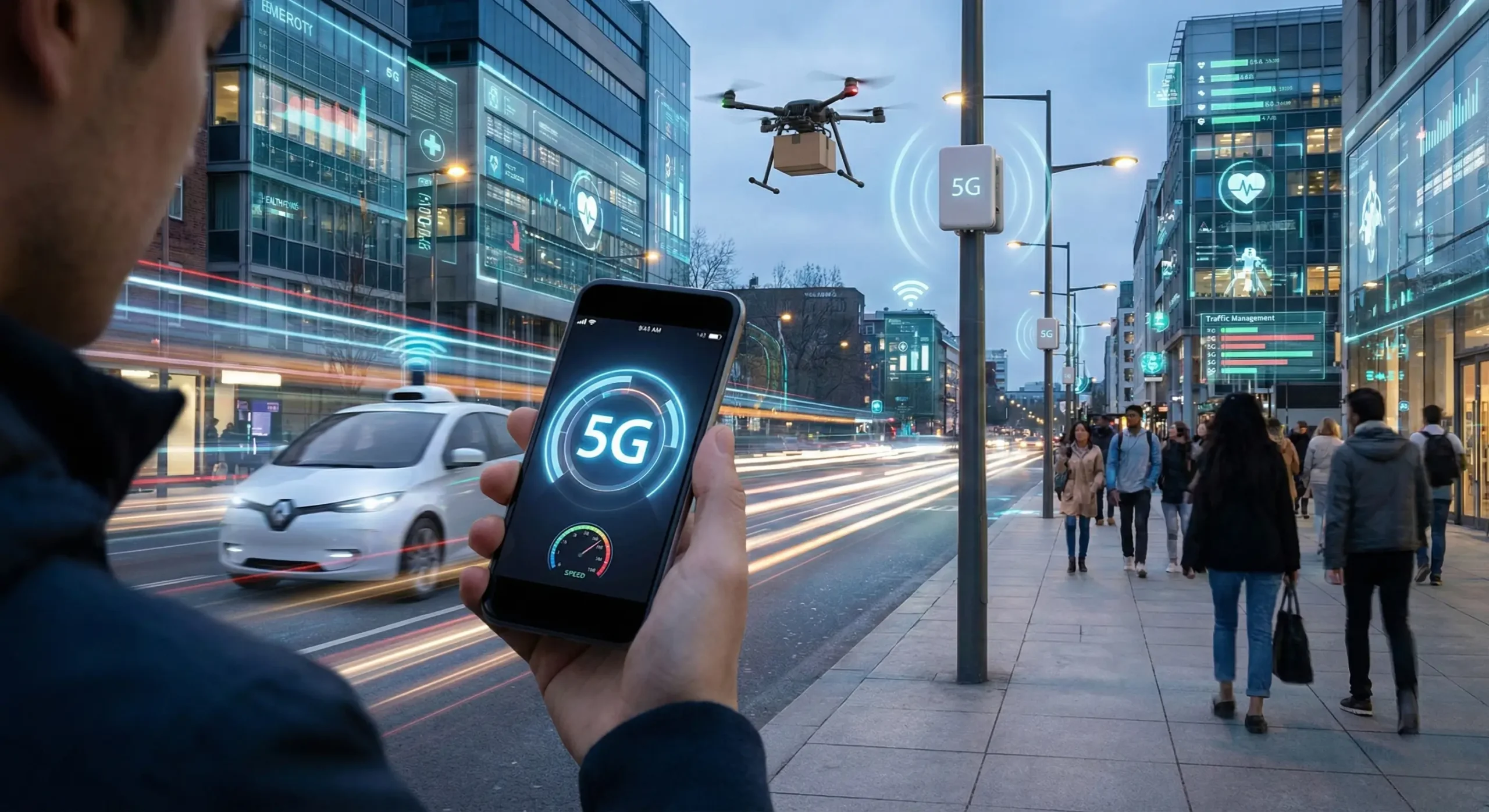
Imagine a city where traffic lights adjust in real-time based on actual traffic flow sensed by 5G sensors in the asphalt. Imagine utility companies detecting a water leak the exact second it happens because the pipes themselves are connected to the network. 5G allows for a level of urban coordination that was previously impossible, leading to less traffic, lower energy consumption, and safer streets.
Industrial Automation and Industry 4.0
In the manufacturing world, 5G is a game-changer. Factories can now use wireless robots that are more flexible than their wired predecessors. These robots can communicate with each other and the central control system instantly, allowing for a production line that can reconfigure itself on the fly. This is the backbone of what experts call the fourth industrial revolution.
Common Mistakes and Misconceptions
Whenever a new technology arrives, it is followed by a parade of misunderstandings. 5G is no exception. One of the biggest mistakes people make is assuming that 5G will immediately replace 4G. In reality, they will coexist for a long time. Your phone will likely bounce between 5G and 4G LTE for years to end, depending on your location.
Another common misconception is about the health risks. Despite what you may have read on a suspicious Facebook group, 5G uses non-ionizing radiation. This is the same category as your microwave and your TV remote. It does not have enough energy to damage the DNA in your cells. The higher frequencies used in 5G are actually less capable of penetrating the human skin than lower frequencies.
Best Practices for Transitioning to 5G
If you are looking to take advantage of this technology, you cannot just download an update. You need the right hardware and the right environment.
First, check your hardware. To use 5G, you need a device with a 5G-capable modem. Most flagship phones released after 2020 have this capability, but many budget models still do not. Second, check your carrier’s coverage map. 5G is heavily concentrated in urban areas. If you live in a rural forest, you might be waiting a while for those gigabit speeds.
Third, manage your expectations regarding battery life. In the early stages of 5G, phones often used more power because they were constantly searching for a 5G signal while maintaining a 4G connection. Modern 5G chips are much more efficient, but it is still something to keep in mind if you are a heavy user.
Conclusion: The Quiet Revolution
5G is not just a faster version of 4G. It is a fundamental shift in how we connect to the world. While the average consumer might only notice that their TikTok videos load instantly, the real revolution is happening behind the scenes in hospitals, factories, and city planning offices. It provides the foundation for technologies we have only dreamed of, from fully autonomous transport to widespread augmented reality.
As we move forward, the conversation will shift from “What is 5G?” to “What can we build on 5G?” The infrastructure is being laid, the devices are in our pockets, and the potential is virtually limitless. The next decade will be defined by how well we utilize this invisible highway to solve real-world problems.
If you are interested in learning more about how connectivity is changing our lives, you might want to look into the impact of mobile technology on remote work or explore the latest trends in sustainable tech.